Up 6.8% from £392.1m, with like-for-like sales up 4.1%
Financial
FY26
FY25
Change
Statutory profit before tax
£28.9m
£25.8m
+12.0%
Adjusted profit before tax1
£31.2m
£27.5m
+13.5%
Gross margin
52.4%
51.9%
+50bps
Basic earnings per share
23.6p
21.0p
+12.4%
Adjusted earnings per share1
25.9p
22.4p
+15.6%
Dividend per share
9.2p
8.4p
+9.5%
Free cash flow1
£15.8m
£11.5m
+£4.3m
Net cash1
£36.4m
£29.7m
+£6.7m
Operational
FY26
FY25
Change
Stores in the UK and Ireland
128
124
+4
Club members
2.1m
1.8m
+17%
Repairs completed
48,000
39,000
+23%
Online share of sales
36%
33%
+3pts
Own-brand share of sales
61%
59%
+2pts
Led walks
3,100
2,800
+11%
Colleague engagement
81%
80%
+1pt
Scope 1 and 2 emissions (tCO2e)
1,120
1,380
−19%
1 Alternative performance measure, defined and reconciled on page 124. Emissions are market-based.
Close to the path since 1973
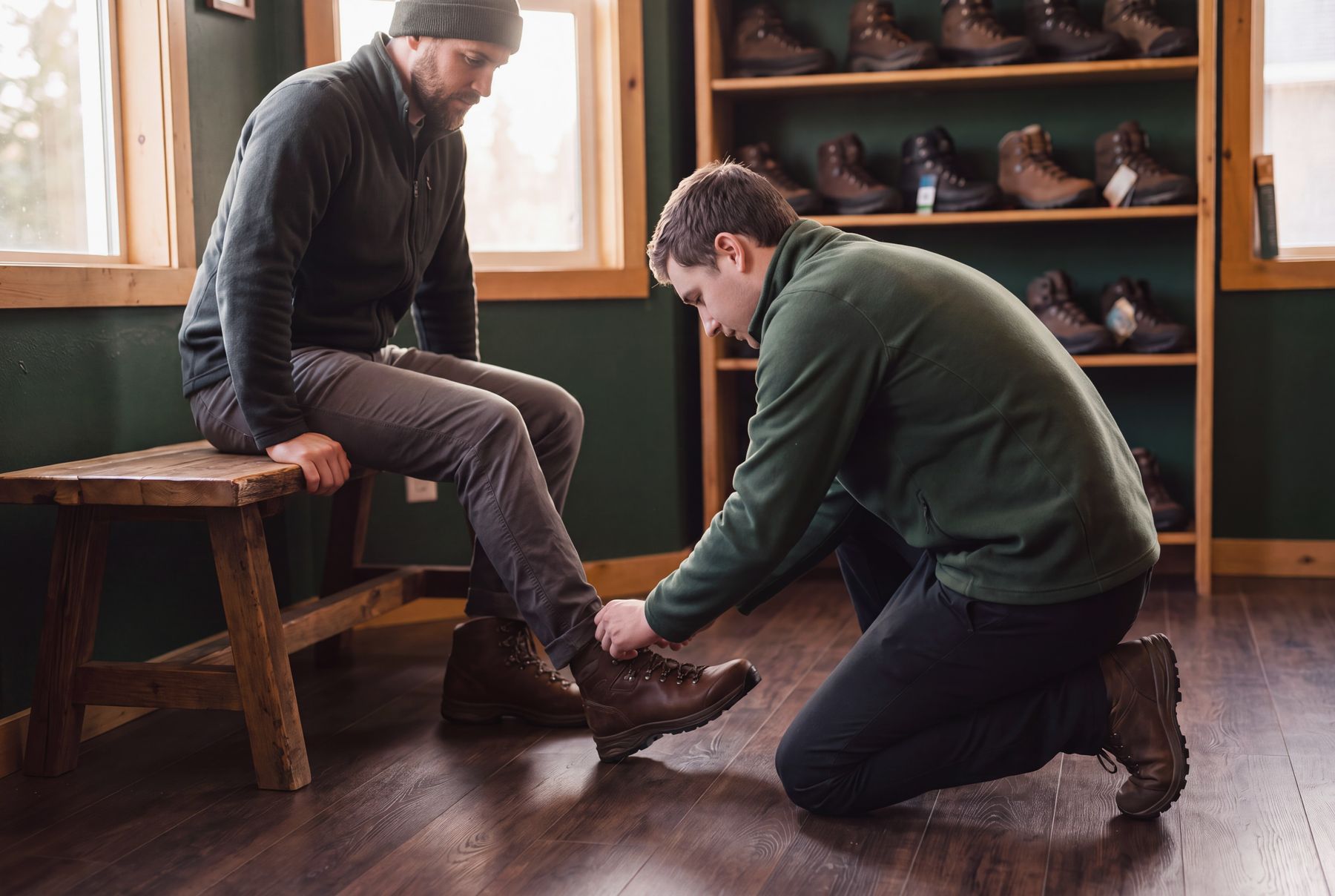
Peggy Swift and Martin Hale opened their first shop in Dorchester to sell boots and tents and hire kit to schools. We still fit boots, mend kit and lead walks from every large store.
88England
15Scotland
13Wales
12Republic of Ireland
Market-town store (110)
Destination store with fitting room, hire and repair bench (18)
Opened in FY26 (6)
Most of our stores are within ten miles of a national park, a national landscape or a national trail.
Revenue by category
Equipment covers packs, tents, sleeping, camp kitchen and navigation. Services are boot fitting, repairs, hire and led walks.
How customers buy
Online includes the app, web and catalogue orders. 41% of online orders are collected in store.Hale is our durable range, made to be repaired. Swift is our lightweight range.
Hale
Waterproofs, boots, packs and family tents built for years of use. Hale waterproofs and packs come with a lifetime repair promise.
Swift
Lightweight kit for backpacking and faster trips. Fewer grams, the same care over how it is made and mended.
3,900colleagues
1,100trained boot fitters
41stores with a repair bench
52stores with a hire counter
3,100led walks for Club members
19,000school and youth hire bookings
1distribution centre serving stores and online from one stock pool
£420,000given to footpath and access projects
Why own Swift & Hale
A specialist with loyal customers, its own brands and net cash, in a market that grows a little every year.
2.1mClub members, 64% of sales
Customers who come back
Fifty years of fitting boots, mending kit and hiring tents to schools. Members get free repairs and a place on led walks, and our net promoter score is 72.
2.6 yearsaverage payback on a new store
Stores where walkers are
Most of our 128 stores are in market towns near national parks and trails, where rents are lower and there are fewer rivals.
61%of sales from Hale and Swift
Our own brands, made to last
Own brands earn a higher margin than other brands, and repairs and resale keep customers with us long after the first sale.
41%of online orders collected in store
One stock pool
Since March 2025 one distribution centre has served stores and online orders. Collection brings extra visits and costs less than home delivery.
£36.4mnet cash, no borrowings
Cash to invest and to return
Free cash flow of £15.8m pays for new stores and repair benches and a dividend covered 2.8 times by adjusted earnings.
41%Total shareholder return over the three years to January 2026
9.2pFull-year dividend per share, up 9.5%
£40mRevolving credit facility, undrawn
Profit grew twice as fast as sales
The total dividend for the year rises 9.5% to 9.2p, and the board reports on its first year under the UK Corporate Governance Code 2024.
Revenue rose 6.8% to £418.6m in FY26, ahead of a market growing at 3% to 4% a year, and adjusted profit before tax rose 13.5% to £31.2m. We invested £23.4m in the business and ended the year with net cash of £36.4m and no borrowings.
On behalf of the board, I thank our 3,900 colleagues. Most of them work in stores where the weather decides how busy the day will be, and this year it changed its mind often.
Performance
Like-for-like sales grew 4.1% and online rose to 36% of sales. Gross margin improved, and savings at Huntworth helped us absorb higher wage and National Insurance costs. Statutory profit before tax was £28.9m (£25.8m). Anjali Mercer explains the results on page 25.
Dividend
The board recommends a final dividend of 6.2p per share. With the interim of 3.0p paid in November 2025, the total for the year is 9.2p (8.4p), covered 2.8 times by adjusted earnings per share and within our policy of 2.5 to 3 times. If shareholders approve it at the AGM, we will pay it on 3 July 2026 to shareholders on the register on 29 May 2026.
Strategy
The board reviewed the strategy during the year and made no changes to its four priorities. We opened six stores, and new stores pay back in an average of 2.6 years. Repairs rose to 48,000, the Club passed two million members, and one stock pool at Huntworth now serves every store and online order.
To see the plan at work, the board visited Huntworth in May, Fort William and our new Oban store in September, and Galway in November.
Culture and colleagues
Peggy Swift, a PE teacher, and Martin Hale, who made and mended tents, started the business in Dorchester in 1973. They sold boots and tents and hired kit to schools. Every store fits boots, 41 have a repair bench and 52 hire out kit, so the business still does much of what they did. Colleague engagement rose to 81%, and store turnover fell to 24% from 27%.
Ravi Dhanda, our designated non-executive director for workforce engagement, chairs the Colleague Voice forum of 14 elected colleagues. It met four times with Ravi and twice with the full board. Colleagues raised Sunday rotas, uniform comfort, a staff discount on Hale Again and safety when working alone in small stores, and management will report back to the board on each during FY27.
The board and the 2024 Code
FY26 was our first year reporting against the UK Corporate Governance Code 2024, and we complied with all of its provisions. The board did not change during the year. Provision 29, which requires the board to declare whether material controls operated effectively, applies to us from FY27. Management identified 31 material controls during the year and internal audit has started testing them, overseen by Fiona Garside’s Audit and Risk Committee.
Harbour Board Review, which has no other connection with the company, ran this year’s external board review. It interviewed each director and the Executive Committee, observed a board meeting and found that we work well together and challenge management openly. It recommended more board time on technology, especially the new merchandise planning system, and on succession below the Executive Committee. Both are in our FY27 plan.
I reach nine years on the board in 2028. The Nomination Committee, led for this purpose by Michael Adebayo as Senior Independent Director, will run the search for my successor. All directors will stand for re-election at the AGM.
Stakeholders
The section 172 statement on page 33 shows how the board weighed the interests of customers, colleagues, suppliers, communities and shareholders. This year’s AGM is at 11am on Thursday 18 June 2026 at Hale House, Dorchester, and the board will be there to answer questions.
Outlook
Like-for-like sales in the first ten weeks of FY27 are up 3.2%. We plan to open six stores, from Settle in the Yorkshire Dales to Killarney in County Kerry, and to bring in the merchandise planning system in stages. The board expects adjusted profit before tax for FY27 to be in line with current market expectations.
Helen Ashdown
Chair
14 April 2026
Six stores, one stock pool
Tom Penhallow reports on trading in a year of changeable weather and higher wage costs, and on progress against our four priorities.
£418.6mRevenueFY25 £392.1m
4.1%Like-for-like sales growthFY25 3.3%
£31.2mAdjusted profit before taxFY25 £27.5m
2.1mClub membersFY25 1.8m
Revenue rose 6.8% to £418.6m in FY26 and adjusted profit before tax rose 13.5% to £31.2m. We opened six stores, finished the move to Huntworth and repaired 48,000 items of kit. I thank every colleague who made that happen, in stores, at Huntworth and at Hale House.
Trading in the year
Like-for-like sales grew 4.1%, with 5.0% in the first half and 3.3% in the second, and the weather explains most of the gap. A dry spring and a warm June sold tents early. August was wet and late-summer camping fell away, then a cold, wet autumn brought customers in for waterproofs, boots and warm layers. Flasks, head torches and socks led a good Christmas, and we went into January with less surplus stock, so the clearance sale was smaller than last year’s.
Online sales grew 16.5% and reached 36% of the total. The app took 44% of online sales, and customers collected 41% of online orders from a store. Hale and Swift, our own brands, rose to 61% of sales, and our net promoter score rose to 72 from 70.
Gross margin rose 50 basis points to 52.4%. Higher pay and National Insurance were our biggest extra costs, and savings from running one distribution centre and lower energy prices covered much of them. Anjali Mercer explains the margin, costs and cash flow on page 25.
Our four priorities
Our purpose is to get people outside more often and bring them home well, and the strategy turns that into four priorities. We kept them as they were. The strategy is on page 18, and the case studies from page 19 cover each priority in more detail.
1. Closer to the path
We opened in Hexham, Builth Wells, Oban, Okehampton, Bakewell and Westport in County Mayo. Each is in a town that walkers and campers pass through on their way out, and Oban and Westport are already trading ahead of plan. We closed our city-centre stores in Swindon and Reading when their leases ended, which leaves 128 stores. New stores pay back in an average of 2.6 years against our target of under three, and we aim to have 150 stores by FY30.
Each new store is in a town that walkers and campers pass through on their way out.
Tom Penhallow, Chief Executive
2. Kit that lasts
Our benches completed 48,000 repairs, up from 39,000, with an average turnaround of nine days. We added eight benches, so 41 stores now have one. Our product team designs new Hale jackets and packs around a short list of standard zips and buckles that every bench keeps in stock. Hale Again sold 6,200 pre-owned and refurbished items, against 1,900 in the first year of the pilot, and 68% of own-brand units used recycled or lower-impact materials, up from 57%. Our targets are 75,000 repairs a year by FY29 and 85% lower-impact materials by FY28. Most of our carbon footprint lies in the products we buy, and the sustainability report on page 35 sets out how we are reducing it.
3. More people outside
The Club grew to 2.1 million members, who bought 64% of everything we sold. Stores led 3,100 walks, up from 2,800, and schools and youth groups made 19,000 hire bookings at reduced rates, against 16,500. With The Open Paths Trust we also lend kit free to schools running their first outdoor trip. The Path Fund, paid for by 1p from every Club purchase and a share of hire income, gave £420,000 to 37 footpath, access and outdoor education projects. We aim to reach 3 million members by FY29.
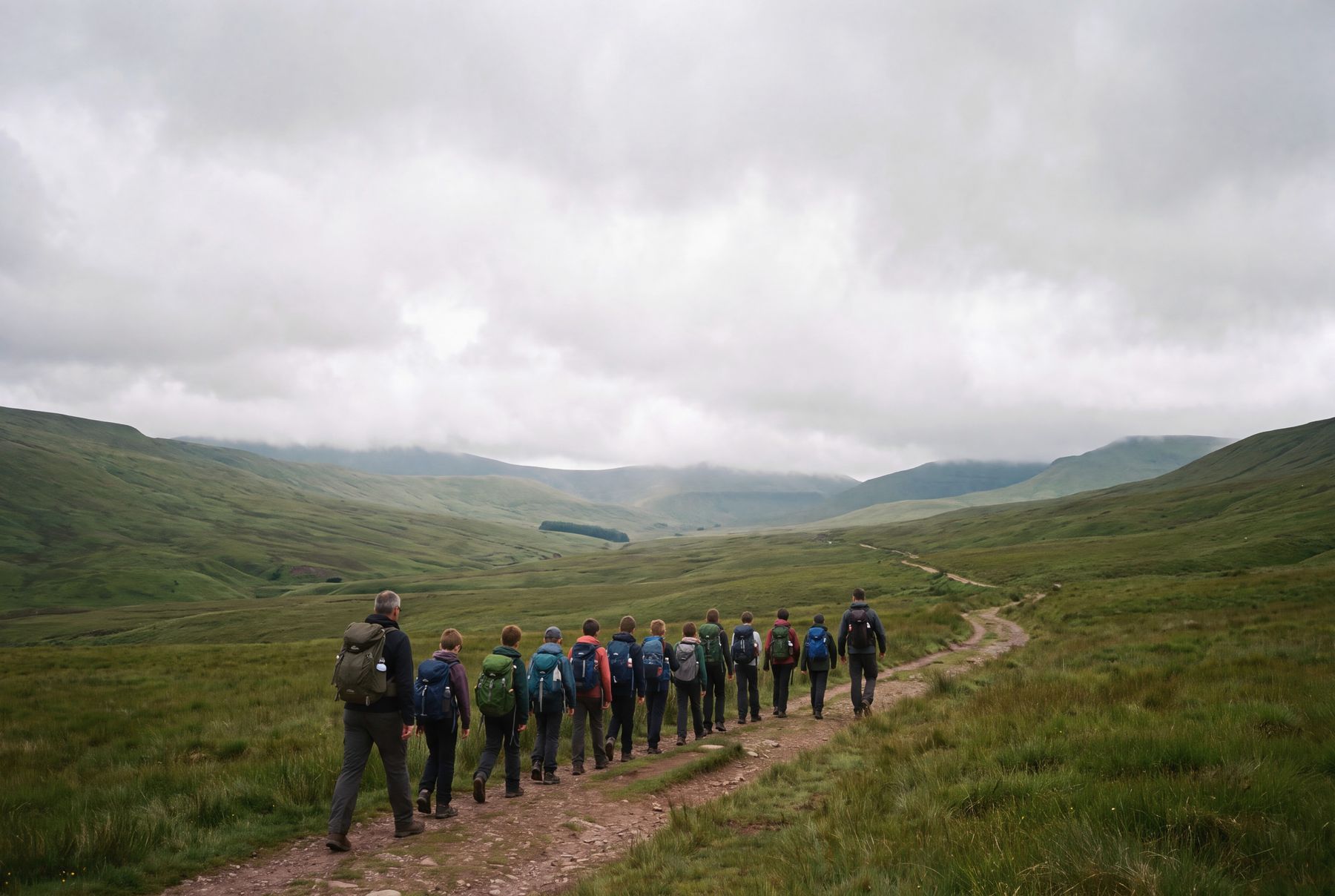
A Club led walk on the Peak District moors. Our stores led 3,100 walks in FY26, free for members.
4. A simpler business
A colleague in one of our smallest stores can now order anything in the Huntworth stock pool for a customer and have it sent to the store or to the customer’s home. Online availability was 97.2% and stock turn 2.2 times, against a target of 2.4 times by FY28. Next comes a new merchandise planning system, which will let buyers and merchandisers plan ranges, buy stock and allocate it to stores in one place. Technology change is a principal risk, so we are bringing the system in during FY27 in stages and running old and new processes side by side until each stage is proven.
Our colleagues
I joined Swift & Hale as a Saturday boot fitter in Exeter in 1994, so I know how much rests on colleagues who know the kit and the hills near their store. Of our 3,900 colleagues, 1,100 are trained boot fitters and 210 hold a mountain or lowland leader award. Each gets two test days a year to try new products on the hill, and their reports changed the hip belt on the Hale 45-litre pack for Spring Summer 2026 after it rubbed on longer days.
We raised the store base rate to £12.75 an hour in April 2025, so every colleague is still paid at least the real Living Wage. Engagement rose to 81%, store turnover fell to 24% from 27%, and RIDDOR-reportable incidents fell to 11 from 14. Through the Colleague Voice forum, chaired by Ravi Dhanda, colleagues in our smaller stores raised safety when working alone. We changed rotas at 31 of those stores so that nobody opens or closes alone and gave colleagues at the other seven personal alarms. In FY27 we will review with the forum how those stores are staffed at quiet times.
Huntworth
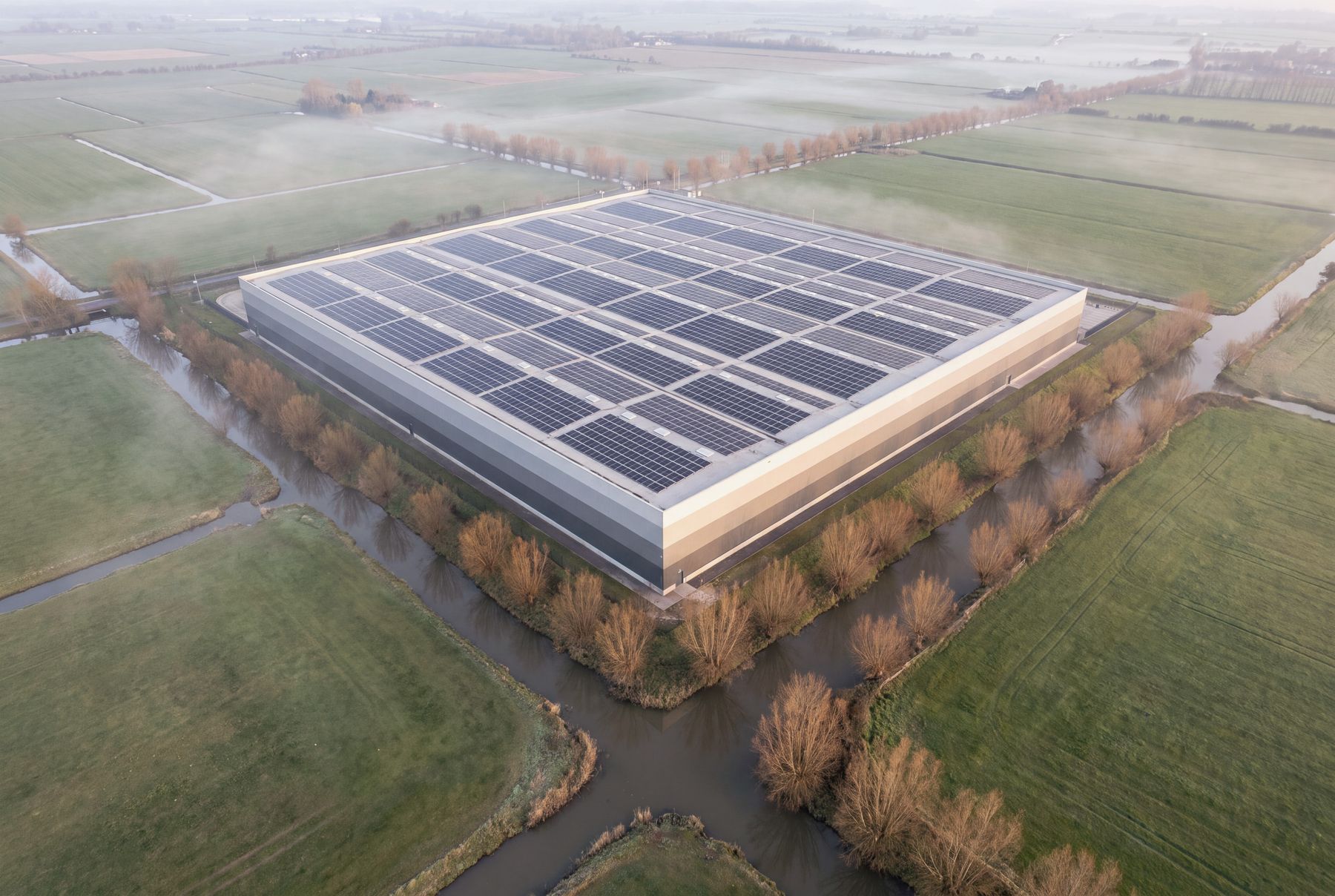
Our 320,000 sq ft distribution centre near Bridgwater, with a 1.9MW solar array on its roof, opened in phases from October 2024 and has served every store and online order since March 2025. In September we surrendered the lease on our old warehouse at Poundbury, in Dorchester, and offered every colleague there a role at Huntworth or Hale House. Receiving, storing and counting stock in one building saves handling and lorry journeys between sites, and lets us move tents or waterproofs quickly to the stores selling them. We added automated parcel handling during the year, and six of our nine delivery vans are now electric. Across the business, Scope 1 and 2 market-based emissions fell to 1,120 tonnes of CO2e from 1,380. Mike Trevail, our Supply Chain Director, and the Huntworth team kept stores supplied through the final stages of the move.
Where we need to do better
Only 94% of next-day deliveries arrived on time, and most of the late ones came in the December peak, when Huntworth handled its highest parcel volumes. We have added sortation capacity and changed carrier collection times before this year’s peak. The Colleague Voice forum also told us that Sunday rotas are still too rigid for colleagues with young families. This year store managers will plan Sunday cover with the forum’s input, and we will report on what changed.
Outlook
Like-for-like sales in the first ten weeks of FY27 are up 3.2%. We plan to open six stores, in Settle, Dolgellau, Pitlochry, Kendal, Buxton and Killarney, add six repair benches, take Hale Again to ten more stores and lead more than 3,300 walks. The merchandise planning system is the biggest change to our systems this year, and we will take it one stage at a time. The weather will move sales from month to month, as it always does. We expect adjusted profit before tax for FY27 to be in line with current market expectations.
Tom Penhallow
Chief Executive
14 April 2026
Questions we were asked this year
Online sales grew 16.5% and store sales 2.0%. Why keep opening stores?
Stores fit boots, mend jackets, hire tents to schools and lead walks, and those services are a large part of why people join the Club. They also carry much of our online trade. Customers collected 41% of online orders from a store this year, and those sales count as online. When we open in a new town, online sales to Club members who live nearby tend to rise. New stores pay back in an average of 2.6 years. We will keep opening five to seven a year in the right towns, and close a store when its lease ends and the numbers no longer work, as we did in Swindon and Reading.
Do free repairs mean customers buy less new kit?
Some customers keep a jacket longer because we mended it, and we are comfortable with that. The lifetime repair promise is one reason people choose Hale waterproofs and packs, and we design and price them knowing they will come back to a bench. Repairs are free for members on our own-brand kit, and we charge for the rest. A repair also brings a customer into a store twice, to drop off and to collect, and many buy something while they are there. When someone no longer needs a Hale jacket, Hale Again can refurbish it and sell it on, and it sold 6,200 items this year.
Are AI assistants changing how people shop for kit?
Yes, and we list it as an emerging risk. More customers start by asking an assistant which boots suit wide feet or which tent will stand up to the wind on Dartmoor, and some never see a page of search results. We are rewriting our product information so that it answers those questions plainly, with weights, fit notes and waterproof ratings that a person or a machine can compare. Our repair guides and route advice answer the questions people ask, and give them a reason to come to us directly. We expect most customers will still want to try boots on before they buy, and that needs a store and a trained fitter nearby.
More walkers, wetter summers
The UK and Irish market for walking and camping kit is worth about £3.9bn. Five trends shape where we open stores and what we sell.
£3.9bnUK and Irish market for walking and camping kitCompany estimate
3% to 4%Annual market growthSwift & Hale FY26 6.8%
From industry data, we estimate the UK and Irish market for walking and camping clothing, footwear and equipment at about £3.9bn. It grows 3% to 4% a year, and our revenue grew 6.8% in FY26, so we gained share.
Demand follows the seasons and the weather. Tents and summer clothing sell from spring to August, and waterproofs, boots and insulated layers from autumn to January, with a gift peak before Christmas.
More people walking for their health
Many of the people now walking for their physical and mental health are new to it. They need boots that fit, a waterproof that works and, often, some advice and company. Every store fits boots, and our 3,100 led walks, free for Club members, give new walkers a safe way to start.
Holidays closer to home
Households are taking more of their holidays in the UK and Ireland, often camping or staying near a national park or the coast. They arrive in market towns with gaps in their kit. All six of our FY26 openings are in towns like these. Hire counters in 52 stores let families try camping before they buy a tent.
Careful spending, kit kept longer
Customers compare prices closely on basics such as socks and base layers. They pay more readily for boots and waterproofs, where a poor choice means a wet or painful day, and they expect it to last. A growing number also want repairs or second-hand kit. Our own brands, now 61% of sales, let us control price and quality. We completed 48,000 repairs in FY26 and resold 6,200 Hale Again items.
Wetter summers and milder winters
Wet summers cut camping and footfall, and mild winters cut demand for insulated jackets, while heavy rain at any time of year sells waterproofs and boots. One stock pool at Huntworth lets us move stock quickly to the stores where it is selling. Weather is a principal risk (page 49) and part of our climate scenario analysis (page 40).
New ways to find kit
Customers increasingly ask a search engine or an AI assistant which boots to buy, and some visit a retailer’s website only to pay. We are rewriting our product information in plain language, with weights, fit notes and waterproof ratings, and we treat AI-led discovery as an emerging risk.
Five market trends and our response
Trend
What we see
Our response
More people walking for their health
New walkers who need fitted boots, advice and company
Boot fitting in every store; 3,100 led walks
Holidays closer to home
More visitors in market towns near national parks and the coast
Six stores opened in walking and camping towns; hire counters in 52 stores
Careful spending, kit kept longer
Customers pay for quality, then expect repair and resale
Own brands at 61% of sales; 48,000 repairs; 6,200 Hale Again items resold
Wetter summers, milder winters
Bigger swings between camping and wet-weather kit
One stock pool at Huntworth; weather in our climate scenarios
New ways to find kit
Customers ask search engines and AI assistants before they visit
Plainer product information; app at 44% of online sales
Competition
We compete with national outdoor chains, sports retailers, online marketplaces, brands that sell through their own stores and websites, and independent specialist shops. Sports retailers and marketplaces tend to compete on price and range, brand-owned stores on their own products, and independents on local knowledge.
Our advantages are advice and being close to where people walk: most of our stores are in market towns near national parks and trails, where few large retailers trade. Customers cannot buy our own brands elsewhere, and the Club’s 2.1 million members account for 64% of our sales.
How we create value
We design kit to last, buy it well, keep it in one stock pool and sell it where walkers are. Then we keep it working, which brings customers back.
What sets us apart
Expertise in every storeEvery store has trained fitters and at least one qualified walk leader or first aider on each shift.
We mend what we sellThe lifetime repair promise on Hale waterproofs and packs, and repair benches in 41 stores.
A club of 2.1 million membersThe Club gives free repairs, members’ prices and a place on led walks.
What we rely on
Our name and history
Fifty years of fitting boots and mending tents
Colleagues
3,900 people, 1,100 trained fitters, 210 walk leaders
Stores near the path
128 stores, 18 of them destination stores
Design and sourcing
Our own product team and 112 tier 1 factories
The Club
2.1 million members and what they tell us
One stock pool
The Huntworth distribution centre
A strong balance sheet
Net cash and an undrawn £40m facility
What we do
DesignHale and Swift kit is designed in Dorchester to be repaired, and tested on the hill by colleagues.
SourceWe buy from long-standing factories that meet our Ethical Trade Code, and plan freight and currency a year ahead.
StockOne stock pool at Huntworth serves stores, web, app and catalogue orders.
SellCustomers buy in store, online or from the catalogue, and collect 41% of online orders in store.
ServiceFitting, repairs, hire and led walks keep kit in use and bring customers back.
The value we create
Customers
Kit that fits and lasts; 48,000 repairs; 3,100 free led walks
Colleagues
At least the real Living Wage; engagement of 81%
Suppliers
Long relationships; 78% of own-brand spend with our top 30 suppliers
Communities and the outdoors
£420,000 to 37 path and access projects
Shareholders
Adjusted EPS 25.9p; dividend 9.2p per share
The planet
Scope 1 and 2 emissions down 54% since FY22
Four priorities, each with a measure
Our purpose is to get people outside more often and bring them home well. These four priorities turn that into a plan, and each one has a target we report on every year.
1Closer to the path
Open five to seven stores a year in towns near national parks and trails, and refit the stores we have.
FY26
Six stores opened in Hexham, Builth Wells, Oban, Okehampton, Bakewell and Westport. Two city-centre stores closed. 14 refits.
Target
150 stores by FY30, with new stores paying back in under three years.
KPIs Revenue, like-for-like sales, stores, net promoter score Risks R1 Weather, R2 Consumer spending, R9 Store estate
2Kit that lasts
Design own-brand kit to be repaired, mend it in our stores and give it a second life through Hale Again.
FY26
48,000 repairs, eight new repair benches (41 in total), 6,200 Hale Again items resold, 68% of own-brand units in lower-impact materials.
Target
75,000 repairs a year by FY29; 85% lower-impact materials by FY28.
Grow the Club, lead more walks and make it easier for young people to get outdoors.
FY26
2.1 million Club members, 3,100 led walks, 19,000 school and youth hire bookings and £420,000 from the Path Fund.
Target
3 million Club members by FY29.
KPIs Club members, led walks, net promoter score Risks R2 Consumer spending, R5 Cyber security and data
4A simpler business
Run stores and online from one stock pool, with fewer handoffs and faster systems.
FY26
Huntworth fully live from March 2025; 41% of online orders collected in store; online availability 97.2%.
Target
Stock turn of 2.4 times by FY28 (FY26 2.2 times); new merchandise planning system live in FY27.
KPIs Online share, net cash, gross margin Risks R4 Freight and currency, R6 Technology change, R7 Colleagues
Our progress against each priority is measured by the key performance indicators on page 23. Four case studies on page 19 show the work behind the numbers.
Oban, Westport and four more
Priority 1, closer to the path. We opened six stores in FY26. Oban and Westport, both on the Atlantic coast, are ahead of plan.
6Stores openedSwindon and Reading closed
128Stores at 31 January 2026FY25 124
2.6 yearsAverage new-store paybackTarget under three years
We pick a town by looking at where Club members live, how many visitors the area gets and how far those customers travel to their nearest store. Most of each new team is recruited locally and trained at a nearby store before opening. Every new store has boot fitting, local maps and route cards, and a hire counter if the town needs one.
Oban and Westport
Oban opened in September 2025, while the board was on a two-day visit to Fort William and Oban. The town is the ferry port for Mull, Coll, Tiree and Colonsay. Island customers used to drive on to Fort William or buy online. Many now order online and collect at Oban when they come over on the boat.
School groups from the islands already use the Oban hire counter. All 14 colleagues there were recruited locally.
Westport, in County Mayo, opened in October 2025 as our 12th store in the Republic of Ireland. Colleagues from Galway, about an hour and a half away, trained the new team. Westport has no repair bench yet, so its repairs go to the Galway bench.
The other four are Hexham, near Hadrian’s Wall Path; Builth Wells, between the Elan Valley and Bannau Brycheiniog; Okehampton, on the edge of Dartmoor, where our tent testers do much of their work; and Bakewell, in the Peak District.
We closed our city-centre stores in Swindon and Reading when their leases ended. Both had lost sales as customers there moved online, and we offered every colleague a role at another store.
Online sales to Club members who live near a new store tend to rise after it opens.
On a Saturday morning half the shop has a ferry to catch. We fit their boots and get them down to the pier in time.
Kirsty MacInnes, Store Manager, Oban
Next year We plan six openings in FY27, in Settle, Dolgellau, Pitlochry, Kendal, Buxton and Killarney, and expect each to pay back in under three years.
Made to be mended
Priority 2, kit that lasts. We completed 48,000 repairs in FY26, and new Hale jackets and packs use parts that every bench stocks.
48,000Repairs completedFY25 39,000
41Stores with a repair benchFY25 33
6,200Hale Again items resoldFY25 1,900
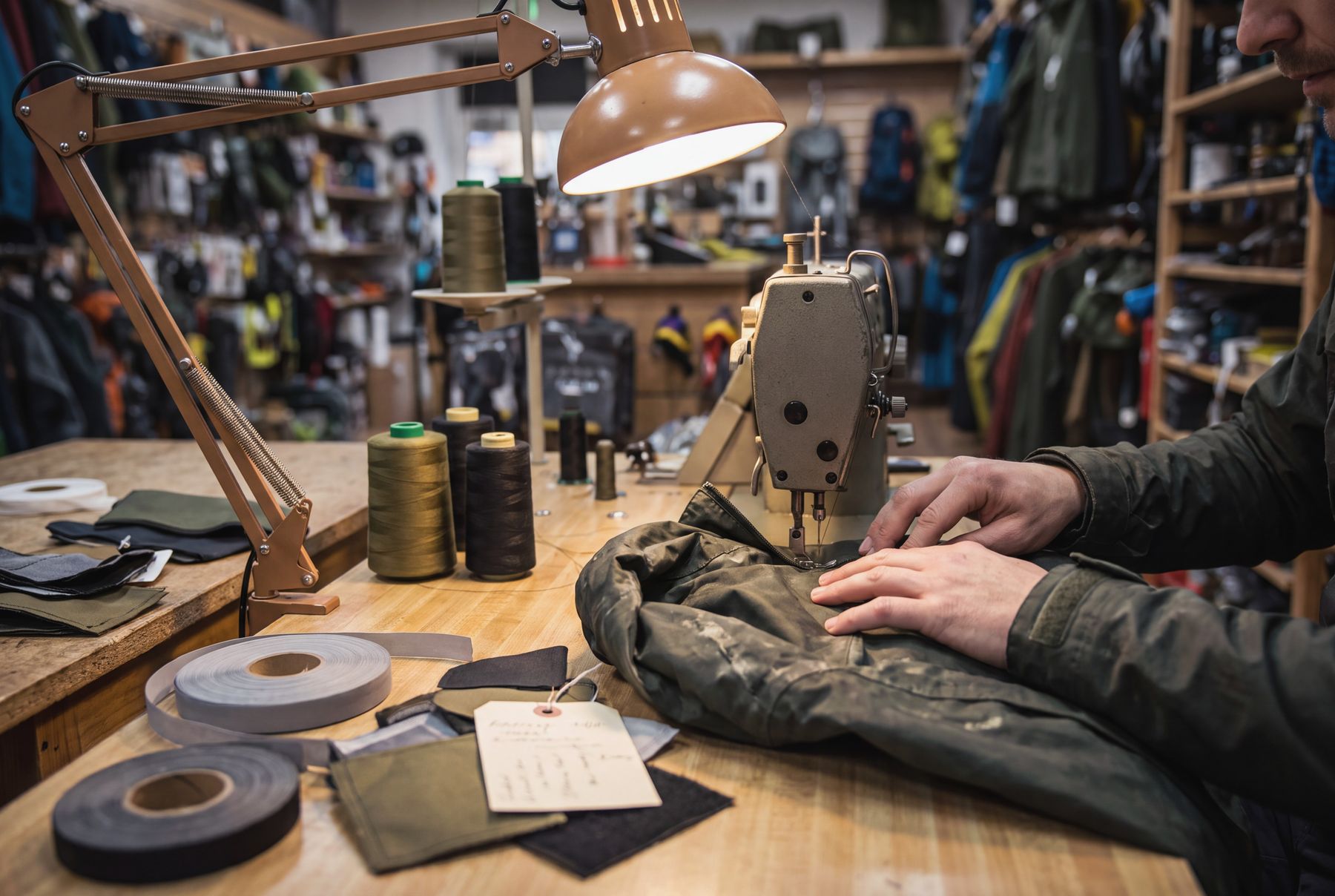
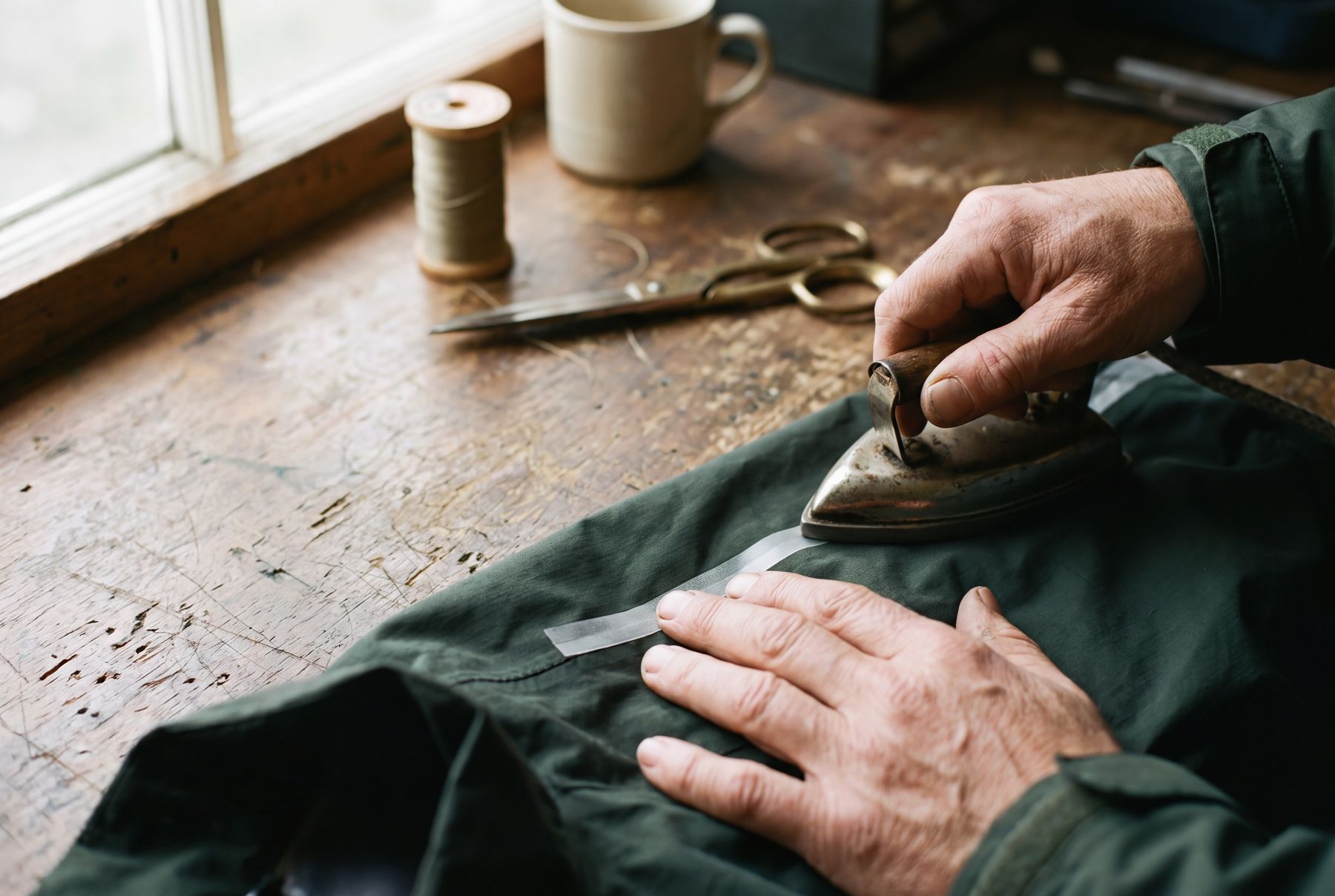
Club members get free repairs on own-brand kit, and Hale waterproofs and packs carry a lifetime repair promise. Most jobs are zips, seam re-taping and broken tent pole sections. Boots go to a partner workshop in Northamptonshire for resoling.
Stores without a bench send repairs to the nearest store that has one, and the average turnaround was nine days. Customers book at the till or in the app, and anyone paying for a repair is told the price before work starts. Each repair also brings the customer into a store twice.
The eight benches we added this year went to the stores sending away the most repairs. Each bench has at least two trained technicians, and new technicians spend six weeks at an established bench first.
Our product team, led by Hannah Coutts, designs new Hale jackets and packs around a short list of standard zips, buckles and pole sections. Suppliers send offcuts of each season’s fabric so that patches match. On Dartmoor, our testers check how easily a pole section or buckle can be swapped in the field.
Hale Again
Hale Again sells pre-owned and refurbished own-brand kit in 14 stores and online. Stock comes from customers who trade kit in for a credit voucher and from returns we cannot sell as new. A bench cleans, checks and repairs each item before it goes back on sale. Most items sell for 40% to 60% of the new price.
All Hale waterproofs have had a PFAS-free water-repellent finish since Spring Summer 2025, and Swift followed for Spring Summer 2026. These finishes need re-proofing more often, so the benches offer a wash-in service.
Mostly I fix zips. A ten-year-old jacket with a broken zip is still a good jacket, and an hour’s work has it back on Skiddaw.
Ellie Rowe, Repair Technician, Keswick
Next year In FY27 we plan to add six benches, taking us to 47, bring Hale Again to ten more stores and complete more than 55,000 repairs.
3,100 walks from our doors
Priority 3, more people outside. In our post-walk survey, 38% of walkers said it was their first organised group walk.
2.1mClub membersFY25 1.8m
3,100Led walksFY25 2,800
19,000School and youth hire bookingsFY25 16,500
The Club grew by about 300,000 members in the year. Most people join in a store, often at a boot fitting, and the membership card is in our app. Membership brings members’ prices, free repairs on own-brand kit and a place on our led walks, and members accounted for 64% of sales.
Led walks, free for members, include short walks for beginners, navigation sessions and winter evening walks by head torch. Every walk has a qualified leader and a first aider, and 210 colleagues now hold a mountain or lowland leader award.
Swift & Hale started in 1973 hiring kit to schools, and youth hire is still part of the business. Hire counters in 52 stores lend tents, rucksacks, sleeping bags and stoves to school and youth groups at reduced rates. We set school rates so that the cost of kit does not stop a trip. With The Open Paths Trust, our partner on youth outdoor access, we also lend kit free to schools running their first outdoor trip.
The Path Fund
The Path Fund takes 1p from every Club purchase and a share of hire income, so it grows as the Club does. In FY26 it gave £420,000 to 37 footpath, access and outdoor education projects (FY25 £360,000).
Grants paid for gates in place of stiles near Okehampton and for repairs to an eroded path on the moors above Hathersage. A panel that includes colleagues from stores near each project helps choose the grants. The average grant was about £11,000.
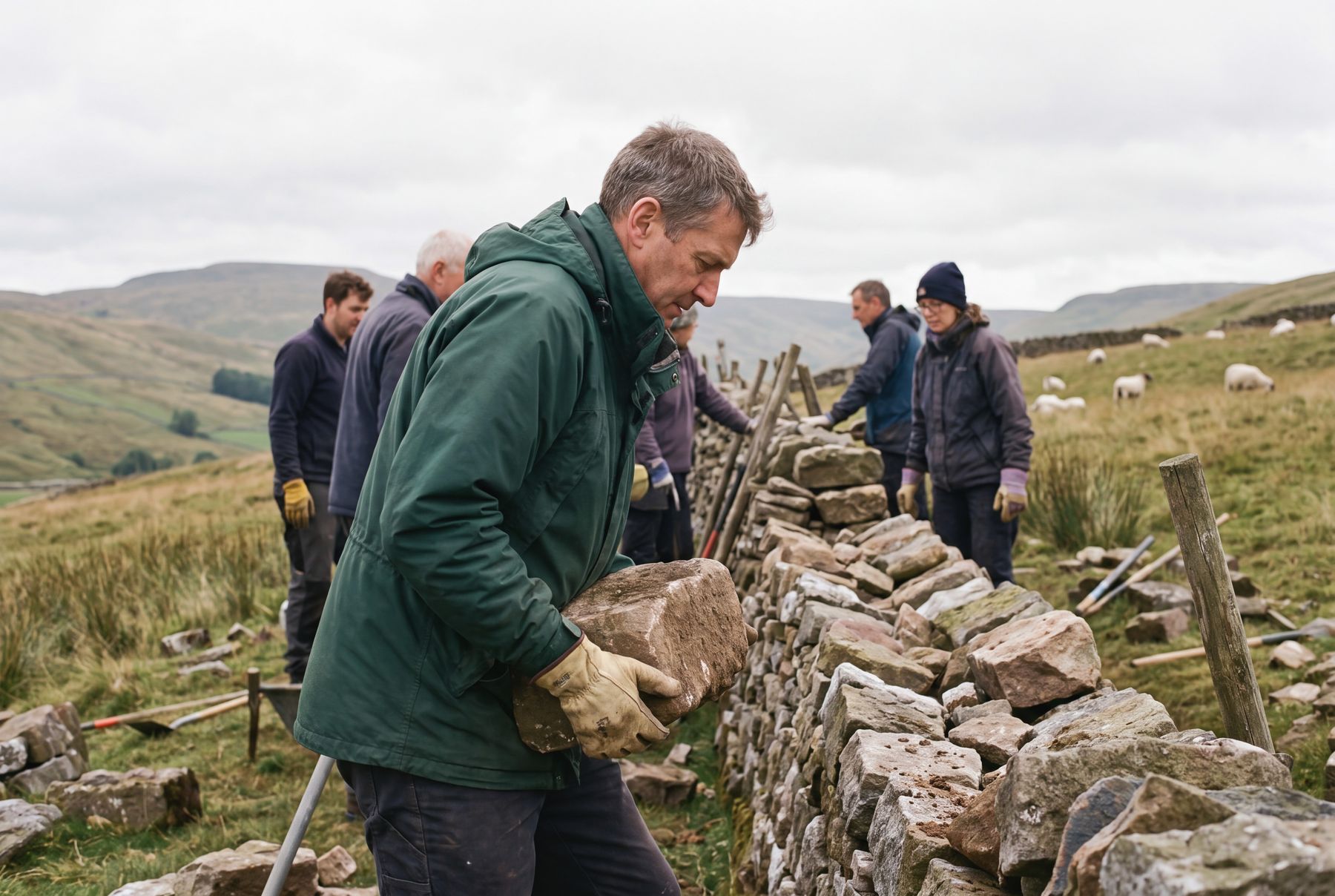
Colleagues gave 2,100 volunteer days, some of them rebuilding dry stone walls in the Yorkshire Dales.
My Thursday walk is for people who have never walked with a group. Some turn up in trainers, and a few now walk Stanage Edge alone.
Priya Nair, Assistant Manager, Hathersage
Next year In FY27 we plan more than 3,300 led walks and new hire counters in Kendal and Killarney, working towards 3 million Club members by FY29.
One stock pool, fewer handoffs
Priority 4, a simpler business. Since March 2025 every store and online order has drawn on one pool of stock at Huntworth, in Somerset.
41%Online orders collected in storeOnline share of sales 36%
97.2%Online availabilityNext-day deliveries on time 94%
2.2 timesStock turnTarget 2.4 times by FY28
Huntworth, near Bridgwater, covers 320,000 sq ft, opened in phases from October 2024 and has a 1.9MW solar array on its roof. We left our old warehouse at Poundbury, Dorchester, in September 2025 (page 33).
Store colleagues can now order any item in the pool for a customer and have it sent to the store or to the customer’s home. The app shows stock in the customer’s nearest store as well as at Huntworth. Online orders returned to a store go back into the pool, and stores get smaller deliveries more often.
With one building we count stock once a year instead of twice, and less of it is lost or damaged moving between sites. We added an automated parcel sorter for online orders in autumn 2025. Most late next-day deliveries came in the December peak, so we have added sortation capacity and changed carrier collection times before the next one.
Planning in one system
Our teams plan, buy and allocate ranges in several separate tools and pass data between them by hand. The new merchandise planning system puts that work in one place. Sam Whitlock, our Chief Technology Officer, leads the programme, and we will run the old and new systems side by side at each stage. We expect it to help us buy closer to demand, so that we carry less stock for the same sales and clear less at the end of each season.
My team picks for a shop in Galway and a customer in Glasgow off the same shelf. Before Huntworth, stores and online had separate stock.
Lee Hooper, Shift Manager, Huntworth
Next year The new system goes live in stages through FY27, starting with footwear, and we aim to keep online availability above 97%.
How we measure progress
Eight financial and eight non-financial measures, each with five years of history. The R mark shows the ones that feed into executive pay.
Financial
Revenue
Sales to customers, excluding VAT and after returns.
13
£418.6mFY25 £392.1m
Like-for-like sales growth
Growth from stores open a year or more, and online.
13
4.1%FY25 3.3%
Gross margin
Gross profit as a share of revenue.
24
52.4%FY25 51.9%
Statutory profit before tax
Profit before tax as reported.
14
£28.9mFY25 £25.8m
Adjusted profit before tax
Profit before tax excluding adjusting items.
14R
£31.2mFY25 £27.5m
Basic earnings per share
Adjusted EPS of 25.9p is used for the LTIP.
R
23.6pFY25 21.0p
Dividend per share
Interim paid plus final proposed.
9.2pFY25 8.4p
Net cash
Cash less borrowings, before lease liabilities.
4
£36.4mFY25 £29.7m
Non-financial
Stores
Stores trading at the year end.
1
128FY25 124
Online share of sales
Web, app and catalogue sales.
4
36%FY25 33%
Club members
Members active in the last 24 months.
3R
2.1mFY25 1.8m
Repairs completed
Repairs finished in stores and by our partner workshop (thousands).
2R
48,000FY25 39,000
Net promoter score
From surveys after online orders and store visits.
13
72FY25 70
Colleague engagement
Engagement index from the annual survey (86% response).
R
81%FY25 80%
Scope 1 and 2 emissions
Market-based tonnes of CO2e. Target 90% below FY22 by FY30.
2R
1,120tFY25 1,380t
Own-brand share of sales
Hale and Swift sales as a share of revenue.
2
61%FY25 59%
Strategic priorities: 1Closer to the path 2Kit that lasts 3More people outside 4A simpler business RLinked to executive pay
FY24 was a 53-week period. Like-for-like sales, adjusted profit before tax and net cash are alternative performance measures, explained on page 124.
A better margin and more cash
Adjusted profit before tax rose 13.5% to £31.2m. We paid for six new stores and a higher dividend without borrowing and finished with net cash of £36.4m.
£31.2mAdjusted profit before taxFY25 £27.5m
25.9pAdjusted basic earnings per shareFY25 22.4p
£15.8mFree cash flowFY25 £11.5m
£36.4mNet cash, with no borrowingsFY25 £29.7m
Sales grew in every product category and in both the UK and Ireland. Gross margin rose 50 basis points, and operating costs grew more slowly than sales despite a large rise in pay, so adjusted operating profit grew more than twice as fast as revenue.
Statutory profit before tax rose 12.0% to £28.9m (FY25 £25.8m) after £2.3m of adjusting items, which I explain below. We define each adjusted measure and reconcile it to its statutory equivalent on page 124.
Summary of results
52 weeks to 31 January 2026
FY26
FY25
Change
Revenue
£418.6m
£392.1m
+6.8%
Like-for-like sales growth
4.1%
3.3%
+80bps
Gross margin
52.4%
51.9%
+50bps
Adjusted operating profit
£36.5m
£31.6m
+15.5%
Adjusted profit before tax
£31.2m
£27.5m
+13.5%
Statutory profit before tax
£28.9m
£25.8m
+12.0%
Adjusted basic earnings per share
25.9p
22.4p
+15.6%
Basic earnings per share
23.6p
21.0p
+12.4%
Dividend per share
9.2p
8.4p
+9.5%
Net cash
£36.4m
£29.7m
+£6.7m
Free cash flow
£15.8m
£11.5m
+£4.3m
Revenue
Revenue rose 6.8% to £418.6m. Like-for-like sales grew 4.1% (FY25 3.3%): 5.0% in the first half and 3.3% in the second, after a wet August cut late-summer camping. Most of the rest of the growth came from our six new stores, less the sales we gave up by closing Swindon and Reading.
Equipment grew 8.2% to £129.8m on the strength of first-half camping. Waterproofs and layers grew 5.8% to £142.3m and footwear 5.7% to £125.6m, both helped by a cold, wet autumn. Services (boot fitting, repairs, hire and led walks) grew fastest, by 11.2% to £20.9m.
Online sales grew 16.5% to £150.7m, taking the online share to 36% (FY25 33%), and the app took 44% of them. Store sales grew 2.0% to £267.9m. That split understates the stores, because customers collect 41% of online orders from a store and we count those sales as online. UK revenue rose 6.4% to £381.0m. In the Republic of Ireland revenue rose 10.9% to £37.6m, helped by the new store in Westport.
Gross profit rose 7.8% to £219.3m, and gross margin rose 50 basis points to 52.4% (FY25 51.9%). Own brands, which earn a better margin than the third-party brands we sell, rose to 61% of sales (FY25 59%) and added about 30bps. Lower freight rates added another 30bps or so: we agreed most of the year’s container contracts in early 2025, when rates from Asia were well below their 2024 peak. Buying more cautiously for the second half left less summer stock to mark down, worth about 20bps.
A weaker pound against the US dollar in the second half took off about 30bps. We buy about 38% of our cost of goods in dollars and hedge up to 12 months ahead, which delayed and softened the effect.
Operating costs
Adjusted operating costs (selling, distribution and administrative costs before adjusting items) rose 6.3% to £182.8m, a little slower than sales, so they fell from 43.8% to 43.7% of revenue.
Staff costs rose 8.2% to £96.4m (FY25 £89.1m). The National Living Wage rose 6.7% in April 2025, and employer National Insurance changes from the same month added about £2.3m, including increases that contractors passed on to us. The average number of colleagues rose by 200 to 3,900: 120 in stores, mainly in the new openings, 60 in distribution as online volumes grew, and 20 at Hale House.
Depreciation and amortisation rose £2.9m to £33.8m, mostly from a full year of depreciation on the Huntworth lease and on stores opened in FY25 and FY26.
Other operating costs, from business rates to parcel delivery, rose by £0.7m, although we had four more stores and 16.5% more online sales to deliver. Running one stock pool at Huntworth saved about £2.4m against the old two-site network, mainly through fuller lorries to stores and no more overflow storage with third parties. Energy costs fell by about £0.9m when fixed-price contracts agreed in 2022 came to an end.
Adjusted operating profit rose 15.5% to £36.5m (FY25 £31.6m), a margin of 8.7% (FY25 8.1%). Statutory operating profit was £34.2m (FY25 £29.9m).
Adjusting items
We treat an item as adjusting when it is material in size or nature and falls outside normal trading. The Audit and Risk Committee reviews how we classify these items each year (page 70). Adjusting items before tax were £2.3m (FY25 £1.7m).
Net store impairment was £1.5m. Our annual review of every store led us to charge £2.1m against four stores, mostly in larger town centres, whose sales and footfall have fallen behind plan, and to reverse £0.6m of earlier charges at two stores where trading has recovered. These amounts are irregular and rest on long-range forecasts, so we keep them out of adjusted profit. Note 16 shows how sensitive they are to our assumptions.
Leaving the former Poundbury warehouse in Dorchester cost £0.8m. That covers the payment to the landlord for surrendering the lease in September 2025, dilapidations and clearing the building. The section 172 statement on page 33 explains how the board reached the decision.
FY25’s only adjusting item was £1.7m of dual running costs during the move to Huntworth, which is now complete. The tax credit on this year’s items is only £0.2m because most of the impairment is not deductible.
2026
2025
£m
£m
Net store impairment (impairment £2.1m less reversals £0.6m)
1.5
–
Exit costs for the former distribution centre
0.8
–
Distribution centre dual running and transition costs
–
1.7
Adjusting items before tax
2.3
1.7
Tax on adjusting items
(0.2)
(0.4)
Adjusting items after tax
2.1
1.3
Reconciliation to adjusted profit
Statutory profit before taxation
28.9
25.8
Adjusting items
2.3
1.7
Adjusted profit before taxation
31.2
27.5
Net finance costs
Net finance costs were £5.3m (FY25 £4.1m). Interest on lease liabilities makes up nearly all of our finance costs and rose to £5.9m (FY25 £4.5m) with a full year of the Huntworth lease and the new store leases. Fees on the revolving credit facility were £0.5m (FY25 £0.4m). Interest on cash deposits rose to £1.1m (FY25 £0.8m) because average balances were higher.
Taxation
The tax charge was £7.5m (FY25 £6.7m), an effective rate of 26.0% (FY25 26.0%). That is slightly above the UK main rate of 25% because some costs, mainly the store impairment, are not deductible, partly offset by the lower rate on profits in the Republic of Ireland. We paid £6.9m of corporation tax (FY25 £6.3m). The board approves our tax strategy each year, and we publish it on our website.
Earnings per share
Profit after tax rose to £21.4m (FY25 £19.1m). Basic earnings per share rose 12.4% to 23.6p (FY25 21.0p) and diluted earnings per share to 23.4p (FY25 20.8p). Adjusted basic earnings per share rose 15.6% to 25.9p (FY25 22.4p). The weighted average number of shares fell to 90.7 million (FY25 91.0 million) because the employee benefit trust bought shares to meet future share awards. It held 860,000 shares at the year end (FY25 630,000).
Dividend and capital allocation
The board proposes a final dividend of 6.2p per share (FY25 5.6p). With the interim dividend of 3.0p paid in November 2025, that makes 9.2p for the year (FY25 8.4p), an increase of 9.5%. Adjusted earnings per share cover it 2.8 times, within our policy of a progressive dividend covered 2.5 to 3 times. If shareholders approve it at the AGM on 18 June 2026, we will pay it on 3 July 2026 to those on the register on 29 May 2026 (ex-dividend date 28 May 2026), at a cost of about £5.6m.
Our priorities for capital are unchanged. We invest first in stores, refits, repair and systems where we can see a clear return. Next comes the progressive dividend, and after that we return surplus cash to shareholders. The board will consider a share buyback if net cash stays above about £30m through the seasonal low point. That comes in October, when we have paid for autumn and winter stock and are still waiting for Christmas trading. In October 2025 net cash fell below £30m, so we are not proposing a buyback this year. The board will look again with the FY27 half-year results in September 2026.
Cash flow
Cash generated from operations rose to £72.2m (FY25 £58.9m), mostly from higher profit. Working capital released £1.2m, against an outflow of £3.1m in FY25. Inventories rose by £4.8m, a little less than sales. Trade and other payables rose by £6.8m: trade payables were £3.8m higher because more spring stock arrived in the last weeks of January than a year before, and accruals were £1.8m higher, mostly for colleague bonuses. We did not change our payment terms with suppliers. After tax paid of £6.9m, net cash from operating activities was £65.3m (FY25 £52.6m).
Free cash flow, the cash left after capital expenditure, lease payments and net interest, rose to £15.8m (FY25 £11.5m). Lease payments rose to £26.7m (FY25 £21.0m) with the first full year of rent at Huntworth and the new stores. After dividends of £7.8m and £1.3m for shares bought by the employee benefit trust, net cash rose by £6.7m.
2026
2025
£m
£m
Net cash from operating activities
65.3
52.6
Capital expenditure
(23.4)
(20.5)
Lease payments (principal and interest)
(26.7)
(21.0)
Net other interest
0.6
0.4
Free cash flow
15.8
11.5
Dividends paid
(7.8)
(7.3)
Purchase of own shares
(1.3)
(0.6)
Increase in net cash
6.7
3.6
Capital expenditure
Capital expenditure was £23.4m (FY25 £20.5m), of which £18.3m was on property, plant and equipment and £5.1m on software. Each of the six new stores cost about £1.0m to fit out.
Capital expenditure in FY26
Project
What it paid for
£m
New stores
Fitting out Hexham, Builth Wells, Oban, Okehampton, Bakewell and Westport
6.0
Refits
14 store refits, including larger boot-fitting areas
5.4
Repair benches
Eight new benches, taking the total to 41 stores
0.8
Distribution centre
Automated sortation and packing for online orders at Huntworth
4.1
Technology
App, website and the first stage of the new merchandise planning system
5.1
Maintenance and other
Heating, roofs and store equipment across the estate
2.0
Total
23.4
Balance sheet and leases
Net assets rose to £131.4m (FY25 £117.8m). Property, plant and equipment rose to £64.3m (FY25 £58.6m) as capital expenditure ran ahead of depreciation.
Inventories were £88.7m (FY25 £83.9m) and stock turn was 2.2 times, against our target of 2.4 times by FY28. The provision for slow-moving and obsolete stock rose to £4.1m (FY25 £3.6m), mostly for summer camping lines left over after the wet August.
Lease liabilities were £118.4m (FY25 £116.0m). We added £23.2m of new leases and renewals, mainly for the new stores, and paid £26.7m. Most store leases run for ten years or less, and the average time to the next break or expiry is about four and a half years, so we can review each store as its lease comes up. In the next two years, 41 leases reach a break, expiry or rent review. In FY26 we renewed 16 leases at rents 4% lower on average.
Net debt including lease liabilities fell to £82.0m (FY25 £86.3m), 1.2 times adjusted EBITDA (FY25 1.4 times). Adjusted EBITDA, which is adjusted operating profit before depreciation and amortisation, rose 12.5% to £70.3m (FY25 £62.5m). Lenders and investors use it to compare retailers with different mixes of owned and leased property.
2026
2025
£m
£m
Operating profit
34.2
29.9
Adjusting items
2.3
1.7
Adjusted operating profit
36.5
31.6
Depreciation and amortisation
33.8
30.9
Adjusted EBITDA
70.3
62.5
Property provisions, mostly for dilapidations at the end of store leases, were unchanged at £5.3m: we charged £1.6m, used £1.2m on stores we left or handed back and released £0.4m. We have no defined benefit pension scheme.
Liquidity and the credit facility
We ended the year with £36.4m of cash and no borrowings. Our £40m revolving credit facility with Wessex Mutual Bank is committed to September 2028 with an option to extend, and we did not draw on it at any point in FY26. Its two covenants, on leverage and fixed charge cover, are tested every six months, and we met both with wide headroom. Liquidity, meaning cash plus the undrawn facility, was £76.4m at the year end.
Going concern
The directors have assessed whether the group can continue as a going concern to 30 April 2027. Starting from the FY27 budget, they applied the severe but plausible scenarios from the viability statement. The harshest combines two wet summers, a four-week cyber attack and a sharp fall in consumer spending. In that case liquidity headroom stays above £25m before any mitigating action, and we would not need the revolving credit facility. The directors have identified no material uncertainty and consider the going concern basis appropriate. The viability statement, covering the three years to January 2029, is on page 52.
Outlook for FY27
Like-for-like sales rose 3.2% in the first ten weeks of FY27. For the year as a whole:
we plan to open six stores, in Settle, Dolgellau, Pitlochry, Kendal, Buxton and Killarney;
we expect capital expenditure of £24m to £26m, covering the new stores, refits, more repair benches and the go-live of the merchandise planning system;
pay will again be our largest cost increase, with an average rise of 4.5% across the workforce from April 2026;
we expect an effective tax rate of about 26%;
we expect adjusted profit before tax to be in line with current market expectations.
Anjali Mercer
Chief Financial Officer
14 April 2026
The people we answer to
Six groups have a direct stake in how we run Swift & Hale. For each group we set out what it told us in FY26 and what we did.
The board hears from stakeholders through management reports and at first hand. In FY26 directors visited Huntworth in May, Fort William and Oban in September, where they saw the Oban store open, and Galway in November.
Ravi Dhanda, our designated non-executive director for workforce engagement, chairs the Colleague Voice forum. The section 172 statement on page 33 shows how what the board heard shaped two of its decisions.
Customers
Customers want kit that fits, works in bad weather and lasts, with honest advice and fair prices however they shop. More of them now expect us to fix what we sell.
Much of this comes to us at the fitting stool and the repair bench. A short survey after every online order and a sample of store visits gives us our net promoter score. Our Trail Panel of about 3,000 Club members tests products and new catalogue ranges before we commit to them, and Leah Brennan, our Chief Customer Officer, reports customer measures at every board meeting.
Our net promoter score rose to 72 (FY25 70) and the Club grew to 2.1 million members. We added eight repair benches, and every Hale waterproof now has a PFAS-free finish.
Colleagues
Our 3,900 colleagues want fair pay, rotas they can plan around and a safe place to work. Many joined because they love being outdoors.
In FY26, 86% of colleagues answered our engagement survey. The Colleague Voice forum has 14 elected colleagues from stores, distribution and head office, and it met four times with Ravi Dhanda and twice with the full board. Colleagues can raise concerns in confidence through our Speak Up line.
The forum raised four subjects. Sunday shifts are now shared on a rota published at least four weeks ahead. A lighter uniform fleece, chosen after a trial in 12 stores, arrives this spring. We are still working out how to give the colleague discount on Hale Again. At the 38 smaller stores where a colleague could open or close alone, we changed rotas at 31 so that nobody does, and gave colleagues at the other seven personal alarms linked to a monitoring centre.
I raised lone working at the first forum because I opened up alone two mornings a week. By autumn our rota had changed so nobody does.
Carys Rowlands, Colleague Voice forum member, Llanberis
Engagement rose to 81% (FY25 80%) and store colleague turnover fell to 24% (FY25 27%). RIDDOR-reportable incidents fell to 11 (FY25 14).
Suppliers and their workers
Suppliers need steady orders and prompt payment to plan ahead. The people in their factories and mills need safe workplaces, fair pay and hours, and a way to raise problems without fear.
Hannah Coutts, our Product and Sourcing Director, leads these relationships, and her team visits every own-brand factory at least once a year. Hale and Swift products are made in 112 tier 1 factories in nine countries. Every supplier signs our Ethical Trade Code, and we check how it works through independent audits and anonymous worker surveys.
In June 2025, 42 suppliers came to our first supplier conference, at Huntworth, to hear our plans for repair, PFAS-free finishes and renewable energy at the mills. Audits found 14 serious issues during the year, mostly overtime above local legal limits at peak. Twelve are resolved and the other two have agreed improvement plans. We paid suppliers in 33 days on average.
Communities and the outdoors
Our customers rely on paths, stiles and bridges that someone has to look after, and the market towns we trade in want busy high streets and local jobs. Store managers work with national park rangers, path groups and schools near their stores.
The Path Fund gave £420,000 to 37 projects in FY26 (FY25 £360,000). A panel of colleagues, Club members and a trustee from The Open Paths Trust, our charity partner for youth outdoor access, decides the grants. Colleagues also gave 2,100 volunteer days, and our stores led 3,100 walks (page 19).
Colleagues rebuilding a dry stone wall in the Yorkshire Dales on a volunteer day.
Shareholders
Shareholders look for steady growth in earnings and dividends, careful use of capital and executive pay that follows performance.
Tom Penhallow and Anjali Mercer present our results twice a year and meet investors after each announcement. They held 84 meetings with existing and prospective investors in FY26, and we hosted analysts and investors at Huntworth in June 2025. Helen Ashdown, our Chair, met five of our largest shareholders to discuss board succession and strategy. Private shareholders can question the whole board at the AGM. At the 2025 AGM, 96.4% of votes supported the remuneration policy and 97.1% the remuneration report.
Government and regulators
Government and regulators expect us to obey the law, pay the right tax, sell safe products and report honestly. New rules on packaging, chemicals in products and textile waste affect how we design and sell kit.
We deal with HMRC through our Customer Compliance Manager, and with the FCA and the FRC as a listed company. We answer government consultations through our trade associations.
Before the Competition and Markets Authority gained direct consumer enforcement powers in April 2025, we checked every environmental claim on our products, website and catalogue against its Green Claims Code. We paid our first fees under the UK packaging extended producer responsibility scheme and are preparing for a similar scheme for textiles. Product safety and regulation is now a principal risk in its own right (page 49).
How the board made its decisions
The directors explain how they had regard to the matters in section 172(1) of the Companies Act 2006 in FY26, with two principal decisions as examples.
The directors confirm that, during the 52 weeks to 31 January 2026, they acted in the way they considered, in good faith, would be most likely to promote the success of the company for the benefit of its members as a whole. In doing so they had regard, among other matters, to the matters set out in section 172(1)(a) to (f) of the Companies Act 2006.
The Company Secretary briefs directors on their duties when they join and gives each one a refresher every year. Every paper asking the board for a decision sets out the likely effect on each stakeholder group and over the long term, alongside the financial case. Where the board weighs one group’s interests against another’s, the minutes record how it did so.
Section 172(1) matters and where to read more
Section 172(1)
How the board has regard to it
Where to read more
(a) The likely consequences of any decision in the long term
The board reviews strategy each year, tests the plan over three years and allocates capital to the four priorities.
Strategy, page 18 Business model, page 17 Viability, page 52
(b) The interests of the company’s employees
Ravi Dhanda chairs the Colleague Voice forum, which also meets the board. Directors review engagement, pay, turnover and safety.
We treat a decision as principal if it is material to the group or significant to one of our stakeholder groups.
Approving six new stores for FY27
In December 2025 the board approved openings in Settle, Dolgellau, Pitlochry, Kendal, Buxton and Killarney. It tested each against our payback target of under three years and checked that the new leases would leave room for decisions on the 41 lease events due in the next two years. Club data showed where members were travelling more than an hour to reach a store.
The stores will create about 150 jobs, and colleagues in nearby stores get the first chance to apply. Four of the six sites are shops that had stood empty, and all six will be heated by heat pumps with no gas supply. The cost fits within FY27 capital expenditure of £24m to £26m and leaves the dividend policy unchanged.
Surrendering the Poundbury lease
Once Huntworth was serving every store and online order, we no longer needed the Poundbury warehouse. In June 2025 the board weighed two options: keep the lease, which had four years to run, and find a subtenant, or agree an early surrender. It approved the surrender at an additional meeting in August, and we left in September.
Surrender cost £0.8m, shown as an adjusting item, against an estimated £2.6m in rent, rates and upkeep if the building had stood empty for the rest of the lease. We offered the 34 colleagues still at Poundbury roles at Huntworth or Hale House. Twenty-two accepted, and the other 12 left with enhanced redundancy pay and help finding local work. The landlord had a local business ready to move in, so the building stayed in use.
What we make and how we make it
Purchased goods make up four fifths of our carbon footprint, so most of our effort goes into what own-brand kit is made of and how long it lasts.
54%Reduction in Scope 1 and 2 emissions (market-based) since FY22FY25 44%
68%Own-brand units made with recycled or lower-impact materialsFY25 57%
48,000Repairs completedFY25 39,000
£420,000Path Fund grants to 37 projectsFY25 £360,000
In FY26 our Scope 1 and 2 emissions (market-based) fell 19% to 1,120 tonnes of carbon dioxide equivalent (tCO2e), 54% below our FY22 baseline. Scope 3 emissions, more than 99% of our footprint, rose 2% to an estimated 168,000 tCO2e as sales grew, but fell 5.5% per £m of gross profit, which is how our target is set.
We are behind the pace we set ourselves on living wages in our supply chain, and an audit found migrant workers at one factory who had paid recruitment fees for their jobs (page 39).
Our approach
We refreshed our materiality assessment in summer 2025, using a survey of 2,400 Club members and the views of colleagues, suppliers, shareholders and The Open Paths Trust. We scored each issue twice, for our effect on people and the environment and for its possible effect on our finances, and the Sustainability Committee approved the result in September 2025. Of the eight issues on the list, durability, repair and resale ranked first, followed by greenhouse gas emissions, pay and conditions in our supply chain, and chemicals in products. Water use and pollution at fabric mills moved up the list.
The Sustainability Committee, chaired by Ravi Dhanda, oversees our targets (page 73). Our Head of Sustainability leads a team of six and reports to Hannah Coutts, Product and Sourcing Director, because most of the work depends on how we design and buy product. An independent provider gave limited assurance over our FY26 energy use and Scope 1 and 2 emissions.
Sustainability targets and progress
Target
Baseline
FY26 progress
Status
Cut Scope 1 and 2 emissions (market-based) by 90% by FY30
FY22: 2,450 tCO2e
1,120 tCO2e, down 54%
On track
Cut Scope 3 emissions per £m of gross profit by 55% by FY32
FY22: 1,000 tCO2e per £m
766 tCO2e per £m, down 23%
On track
Net zero across our value chain by 2045
FY22
Transition plan in preparation
Long term
100% renewable electricity by FY28
FY22: 32%
78%
On track
All nine company vans electric by FY28
FY22: none
Six of nine
On track
85% of own-brand units from recycled or lower-impact materials by FY28
FY25: 57%
68%
On track
PFAS-free water-repellent finishes on all own-brand kit by Spring Summer 2026
Not applicable
Hale since Spring Summer 2025; last Swift lines sold through
Met
75,000 repairs a year by FY29
FY25: 39,000
48,000
On track
Single-use plastic in own-brand packaging down 75% by FY28
FY22
Down 61%
On track
Average pay at all 18 strategic factories at or above a living wage benchmark by FY30
FY25: 3 of 18
5 of 18
Behind
Kit that lasts
Own brands were 61% of sales in FY26. For Hale and Swift we choose the design, the materials and the factory, so that is where we can do most.
Materials
In FY26, 68% of own-brand units used recycled or lower-impact materials, up from 57%. A unit counts when its main fabric, or at least half its material by weight, meets one of our standards, such as recycled polyester or nylon, or organic cotton. The largest change was the move to recycled nylon face fabrics across Hale waterproofs for Autumn Winter 2025. Recycled fabrics strong enough for tent flysheets and the lightest Swift shells are still scarce, and these products are the main obstacle to our FY28 target of 85%. We are testing recycled ripstop with two mills for the Spring Summer 2027 tents.
Taking PFAS out
For years, per- and polyfluoroalkyl substances (PFAS) were the standard way to make outdoor fabrics shed water. They do not break down in the environment, and regulators in the UK and Europe are moving to restrict them. Every Hale waterproof has had a PFAS-free finish since Spring Summer 2025, the last Swift lines with PFAS finishes sold through in FY26, and the Spring Summer 2026 Swift range is PFAS-free. An independent laboratory tests samples from each new range. PFAS-free finishes need reproofing more often, so Hale waterproof labels now carry reproofing instructions and our repair benches offer the service.
Repair
Hale waterproofs and packs carry a lifetime repair promise, and Club members get free repairs on own-brand kit. We completed 48,000 repairs (FY25 39,000), with an average turnaround of nine days, and eight new benches took us to 41 stores with one.
Hale products are now designed to a repair standard. Zips can be replaced without unpicking the seam tape, buckles clip on, and we keep spare parts for at least seven years after a line ends. Technicians log the commonest faults on each product every month, and the product team reads the log before reordering.
People bring a jacket in expecting me to say it’s had it. Usually it’s a zip or a lifted seam, and they have it back the following week.
Mared Pritchard, repair technician, Betws-y-Coed
Packaging
Of our online packaging, 92% can be recycled at the kerbside, and single-use plastic in own-brand packaging is down 61% since FY22. Hale clothing ships in paper bags, and in FY26 we stopped using plastic hangers for own-brand products sent to stores. Most of the plastic left is protective film on footwear and tent poles. UK extended producer responsibility for packaging began in 2025. The EU has agreed rules requiring similar schemes for textiles in member states, including Ireland, and the UK is considering one.
Lower-carbon business
Scope 1 and 2 emissions (market-based) fell 19% to 1,120 tCO2e, and energy use fell 3% to 14,600 MWh, although we ended the year with 128 stores against 124. We do not count carbon offsets towards any of our targets.
The 1.9MW solar array on the Huntworth roof, commissioned in January 2025, generated 1,640 MWh in its first full year, about two fifths of the site’s electricity. We fitted heat pumps in nine more stores during refits, making 22. Every store has LED lighting, and new stores open with heat pumps and no gas connection. Gas heating remains in 19 stores, mostly older buildings, and at Hale House. Three more of our nine delivery vans became electric in FY26, making six.
Renewable electricity rose to 78% of the electricity we use (FY25 71%). Apart from our own solar power, we buy it on supply contracts backed by Renewable Energy Guarantees of Origin in the UK and guarantees of origin in Ireland. The rest is used in stores where the landlord buys the electricity, and in our Irish stores, whose contract renews in September 2026.
To meet the FY30 target we need to cut a further 875 tCO2e, mostly by switching the remaining stores to renewable electricity, replacing the last gas heating and electrifying the last three vans by FY28. Refrigerant leaks from air conditioning are harder to stop, so we fit units with lower global warming potential refrigerants when we refit a store.
Swift kit for one night out. Lighter packs need fewer materials.
Energy use and greenhouse gas emissions
Measure
FY26
FY25
FY22 baseline
Scope 1: gas heating, refrigerants and delivery vans (tCO2e)
520
560
790
Scope 2, location-based (tCO2e)
2,420
2,750
3,480
Scope 2, market-based (tCO2e)
600
820
1,660
Total Scope 1 and 2, location-based (tCO2e)
2,940
3,310
4,270
Total Scope 1 and 2, market-based (tCO2e)
1,120
1,380
2,450
Intensity: Scope 1 and 2 location-based (tCO2e per £m revenue)
7.0
8.4
12.9
Energy use (MWh)
14,600
15,100
17,900
Renewable electricity (% of electricity used)
78
71
32
Scope 3, estimated (tCO2e)
168,000
165,000
171,000
Purchased goods and services as a share of Scope 3 (%)
79
79
80
Scope 3 intensity (tCO2e per £m gross profit)
766
811
1,000
How we measure
We report energy use and emissions under the Companies (Directors’ Report) and Limited Liability Partnerships (Energy and Carbon Report) Regulations 2018, following the GHG Protocol Corporate Accounting and Reporting Standard and its Scope 2 Guidance. Our boundary, set by operational control, covers all our stores, the Huntworth distribution centre, Hale House and our vans. We calculate emissions from metered and invoiced energy use with the UK government’s greenhouse gas conversion factors for company reporting for the relevant year, and country-specific grid factors for the Republic of Ireland. Market-based Scope 2 uses supplier-specific factors where guarantees of origin back our electricity, and residual mix factors elsewhere. Scope 1 covers natural gas, refrigerant losses and van fuel. Energy use covers electricity, gas and transport fuel, and 91% of it was in the UK. Scope 3 is estimated from activity data from our top 30 suppliers and spend-based factors for everything else, so it is less precise than Scope 1 and 2. We would restate the FY22 baseline if a change in method, data or group structure moved it by more than 5%; there was no restatement in FY26. Our intensity ratio is Scope 1 and 2 location-based emissions per £m of revenue.
Scope 3 and our suppliers
Purchased goods make up 79% of our Scope 3 emissions, mostly the energy used to spin yarn and to dye and finish fabric, plus the raw materials themselves. Scope 3 intensity fell to 766 tCO2e per £m of gross profit in FY26, 23% below FY22 and in line with the path to a 55% cut by FY32.
Most of that cut has to happen at mills and factories we do not own. Our top 30 suppliers, 78% of own-brand cost, report their energy use and emissions to us every year, and each agreed a reduction plan with us in FY26. We concentrate on the 26 fabric mills behind them, because dyeing and finishing need a lot of heat and many mills still burn coal to raise it. Twelve now use renewable electricity for at least half their needs (seven a year earlier), and four have replaced coal-fired boilers. We pay for energy audits at mills that ask, and from FY27 our cost negotiations will allow for upgrades that cut emissions. Air freight was under 1% of inbound volume.
People who make our kit
Hale and Swift products are made in 112 tier 1 factories in nine countries: Vietnam, China, Bangladesh, Indonesia, India, Taiwan, Sri Lanka, Portugal and Romania. Vietnam and China account for 61 of them. We have also mapped every tier 2 mill that makes fabric for our own brands, and we publish both lists on our website twice a year.
Standards and audits
Every factory signs our Ethical Trade Code, based on the International Labour Organization’s core conventions, and must pass an independent social audit before we place an order. We audit high-risk factories every year and the rest at least every two years, and at least a third of audits are unannounced or semi-announced. The 94 audits in FY26 raised 612 findings, mostly on working hours, fire safety and health and safety records, and our ethical trade team of four in Dorchester and Ho Chi Minh City follows up each corrective action plan on site.
Two findings were zero-tolerance issues. One factory kept using a subcontractor we had not approved, so we moved its work elsewhere at the end of the season. The other concerned recruitment fees.
Modern slavery
Forced labour is the most serious human rights risk in our supply chain, especially for migrant workers left in debt by recruitment fees paid to agents. In June 2025 an unannounced audit at a tier 1 factory in Taiwan found that 46 migrant workers had paid such fees. The factory repaid them in full, £61,000 in total, by December 2025. An independent auditor interviewed the workers to confirm they had the money, and the factory now recruits only through agencies that charge the employer. We have since added the employer-pays principle for recruitment costs to our Ethical Trade Code, trained all our sourcing and ethical trade colleagues on modern slavery and given workers at 44 tier 1 factories an independent, anonymous helpline. Our modern slavery statement is on our website.
Living wages
In several countries we buy from, the legal minimum wage is not enough to support a family. We compare take-home pay at our 18 strategic factories, which make 59% of own-brand units, with recognised regional living wage benchmarks. Five of the 18 pay at or above the benchmark on average, and across all 18 pay is 89% of it. We are behind our target of all 18 by FY30, and part of the gap comes from our own buying. Since September 2025 we have costed labour separately in negotiations with four of the factories, so that price talks do not squeeze it, and we will do the same with all 18 in FY27. Fixing the Autumn Winter 2026 order calendar earlier than usual also cuts the overtime factories need at their busiest.
Our people and communities
Our stakeholder report on page 31 covers colleague pay, engagement and the Colleague Voice forum. Our median gender pay gap at the April 2025 snapshot was 3.9%. Women make up 54% of our 3,900 colleagues, 45% of store managers and 42% of senior leadership. RIDDOR-reportable incidents fell to 11 from 14, mostly manual handling injuries in stockrooms and at Huntworth or slips on wet store floors.
The Swift & Hale Path Fund, paid for by 1p from every Club purchase and a share of hire income, gave £420,000 to 37 projects (FY25 £360,000), including path repairs on the Cleveland Way and the Pembrokeshire Coast Path. Colleagues gave 2,100 volunteer days.
Planning for wetter summers
Wet summers are our largest physical climate risk, and carbon in the goods we buy is our largest transition risk. We tested both under three scenarios to 2040.
Governance
The board is responsible for our response to climate change and considers it when setting strategy, approving the budget, the three-year plan and major capital projects, and reviewing the principal risks. Climate was on the agenda at four of its nine meetings in FY26. In July 2025 the directors had training from an external adviser on UK SRS and transition plans, and in September the board reviewed the updated scenario analysis.
Climate oversight by the board and its committees in FY26
Forum
Climate responsibilities
Main climate matters in FY26
Board (nine meetings), chaired by Helen Ashdown
Strategy, budget and capital allocation; principal risks; approval of these disclosures
Reviewed the scenario analysis; approved the FY27 budget, including £2.8m of climate-related capital spending; approved the climate principal risk and these disclosures
Sustainability Committee (four meetings), chaired by Ravi Dhanda
Sustainability strategy and targets; the climate risk register; the supplier carbon programme
Reviewed progress against the science-based targets at every meeting and the climate risk register twice; kept the internal carbon price at £85 per tonne
Audit and Risk Committee (five meetings), chaired by Fiona Garside
Risk management; reliability of energy and emissions data; climate in the financial statements
Reviewed these disclosures and the limited assurance report on energy and Scope 1 and 2 data; considered climate in impairment testing and asset lives
Remuneration Committee (five meetings), chaired by Sinead Fallon
Climate measures in executive pay
Set the carbon measure in the FY26 annual bonus; assessed the carbon element of the 2023 LTIP award
Management’s role
Tom Penhallow, Chief Executive, is accountable to the board for climate strategy and performance. Anjali Mercer, Chief Financial Officer, chairs the Climate and Sustainability Steering Group, which met six times in FY26. Its members are four other Executive Committee directors, the Head of Sustainability, the Group Risk Manager and the Head of Property. The group keeps the climate risk register, runs the scenario analysis, tracks our targets and signs off carbon data each half year, and it reports to the Executive Committee and the Sustainability Committee. Each target belongs to the director who controls the emissions: Hannah Coutts for suppliers and materials, Mike Trevail for the distribution centre, vans and freight, and Gareth Pyne for store energy.
Strategy
Time horizons
Our short term runs to FY29, matching our three-year plan and viability period. The medium term, FY29 to FY36, matches a typical new store lease and our FY30 and FY32 targets. The long term, FY36 to 2050, covers our 2045 net zero target.
Risks and opportunities
We treat a climate-related risk or opportunity as material if it could change annual profit before tax by more than £1.5m, about 5% of FY26 adjusted profit before tax, in any of our scenarios. The six below meet that test. Our largest physical exposure is the summer: tents and camping equipment were about 19% of FY26 sales, and most of that sells between April and August.
Material climate-related risks and opportunities
Risk or opportunity
Type
Horizon
Potential impact
Our response
Wetter summers, storms and heat
Physical risk, chronic and acute
Short to long
High. Fewer camping trips and lower summer footfall leave more stock at the end of the season. Heat affects colleagues and raises cooling costs.
Weather scenarios in stock plans; one stock pool, so stock moves to where trade is strongest; year-round ranges and hire; a hot weather working policy.
Flooding at stores and the distribution centre
Physical risk, acute
Medium to long
Medium. Nine stores are in areas at high flood risk; Huntworth is at low risk. Floods would close stores, damage stock and raise insurance costs.
Flood plans and raised stock storage at the nine stores; flood risk checked before we sign any new lease; insurance cover reviewed each year.
Carbon pricing on materials and freight
Transition risk, policy
Medium to long
Medium to high. Carbon taxes in sourcing countries, carbon pricing in shipping and the UK carbon border adjustment mechanism (from January 2027) could raise costs.
Supplier carbon programme and Scope 3 target; internal carbon price of £85 per tonne; sea freight in place of air.
Changing customer expectations and product rules
Transition risk, market and legal
Short to medium
Medium. Customers buy less new kit and expect evidence for green claims. PFAS rules and extended producer responsibility add cost; misleading claims can bring fines.
PFAS-free finishes across own brands; legal review of every environmental claim; repair and Hale Again as take-back routes.
Repair, resale and lower-carbon products
Opportunity, products and services
Short to long
Medium. Customers who buy less new kit still pay for repairs, reproofing and second-hand kit. Services revenue was £20.9m in FY26.
Repair benches in 41 stores and more to come; Hale Again in more stores; target of 75,000 repairs a year by FY29.
Demand for wet-weather kit and UK holidays
Opportunity, markets
Short to long
Medium. Wetter, more changeable weather increases demand for waterproofs, layers and boots, and more people take holidays in the UK.
Broader waterproof and layering ranges; stores close to national parks and trails; led walks all year round.
Effect on strategy and financial planning
We check flood risk and summer heat before signing a lease for a new store, and in FY26 we chose a different unit in Okehampton because the first was at high flood risk. Repair, resale and lower-impact materials, which sit under our Kit that lasts priority (page 18), cut Scope 3 emissions and earn income that depends less on selling new products.
Our three-year plan includes an allowance for summer weather in camping categories, based on the last ten summers, and £7.5m of climate-related capital spending over FY27 to FY29, mainly on heat pumps, the last three electric vans and store energy controls. We considered climate when testing store assets for impairment, setting useful lives and providing for seasonal stock, and found no material effect on the FY26 financial statements (page 104).
Scenario analysis and resilience
We first ran climate scenario analysis in FY23 and updated it in FY26 with an external adviser. Our three scenarios, an orderly transition, a delayed transition and a hot house world, take carbon prices and other transition assumptions from the Network for Greening the Financial System (NGFS), warming pathways from the IPCC and UK weather from the Met Office’s UKCP18 projections. None is a forecast. In the delayed transition, little new policy arrives until 2030, then sudden action squeezes consumer spending. Until about 2030 the physical climate is much the same in all three.
Climate scenarios: main assumptions and estimated annual effect before mitigation
Assumption or effect
Orderly transition
Delayed transition
Hot house world
Warming by 2100, above pre-industrial levels
Below 2°C
About 2°C; physical effects tested at about 2.5°C
About 3°C or more
Reference scenarios
NGFS Below 2°C; IPCC SSP1-2.6
NGFS Delayed Transition; IPCC SSP2-4.5
NGFS Current Policies; IPCC SSP5-8.5
Carbon price on materials and freight, per tCO2e in today’s money
£85 by 2030; £160 by 2040
Under £20 to 2030; £220 by 2040
Under £20 throughout
UK summers disrupted by heavy rain, storms or extreme heat (about two in ten today)
Three in ten by 2040
Three in ten by 2040
Four to five in ten by 2040
Stores in areas at high flood risk (nine today)
10 by 2040
11 by 2040
14 by 2040
Customer demand
Faster move to repair, resale and lower-carbon kit
The same move, arriving later and more abruptly
Little change in preferences; more UK holidays
Revenue in FY30
£1m to £2m lower
£1m to £2m lower
£2m to £4m lower
Costs in FY30
£2m to £3m higher
Under £1m higher
£1m to £2m higher
Revenue in FY40
£3m to £5m lower
£4m to £7m lower
£7m to £12m lower
Costs in FY40
£3m to £5m higher
£5m to £9m higher
£3m to £6m higher
Revenue from opportunities in FY40 (repair, resale, wet-weather kit, UK holidays)
£6m to £10m higher
£4m to £7m higher
£4m to £8m higher
Net effect on profit before tax in FY40
£2m to £3m lower
£5m to £9m lower
£5m to £8m lower
We applied each scenario to our three-year plan, holding the business at its FY26 size. Revenue effects come from a model linking weekly sales in each category to rainfall and temperature over the last ten years, converted to profit at contribution margin. Cost effects cover carbon prices passed on to us, flood damage, insurance, cooling and disruption at mills. All figures are before mitigation and price changes.
In the orderly transition the main effect is on costs, as carbon prices pass along the supply chain, and demand for repair, resale and lower-impact kit offsets much of it. Meeting our Scope 3 target would cut that FY40 cost effect by about a third. The delayed transition hits profit hardest, by £5m to £9m a year by FY40 (about 1% to 2% of FY26 revenue), because carbon costs arrive late and fast while consumers are under pressure. In the hot house world, disrupted summers and floods dominate, and demand for waterproofs and boots makes up part of the loss.
Resilience of our strategy
The board reviewed the analysis in September 2025 and concluded that our strategy and business model are resilient in all three scenarios over the short, medium and long term. The largest effects are small relative to the business and build up gradually, which gives us time to adapt our ranges, sourcing and stores. We have no borrowings, net cash of £36.4m and an undrawn £40m revolving credit facility, and our viability assessment tests two wet summers in a row (page 52).
The analysis does not capture tipping points or several extreme events in quick succession, and the link between weather and sales rests on the last ten years. We will refresh the scenarios at least every three years.
Risk management
Identifying and assessing climate risks
Climate risks go through the group’s standard risk process (page 46). The steering group also keeps a climate risk register, drawing on the scenario analysis, insurers’ flood maps, weather and sales data, and supplier reporting. Its annual workshop looks for new risks, and in October 2025 it added water stress at fabric mills and extended producer responsibility for textiles, both now emerging risks. We score each climate risk for impact and likelihood at each time horizon and carry the highest score into the group register, so the board can compare it directly with other risks.
Managing climate risks
Each climate risk has an owner on the Executive Committee, recorded controls and a target score. We reduce risks where we can, for example through the supplier programme or store flood plans, insure some and accept others within the board’s risk appetite. In FY26 internal audit, co-sourced with Linden Assurance, found the controls over our energy and carbon data adequately designed and made two recommendations, on evidence for refrigerant top-ups and on electricity data from landlords. We have completed both.
Integration with group risk management
Climate change is one of our ten principal risks, and its rating did not change this year (page 49). It also affects five others, including weather and seasonality, freight costs and currency, and the store estate. The Audit and Risk Committee, the board and the Sustainability Committee each review climate risk twice a year, the last in the most detail. Climate also feeds into our viability and going concern assessments.
Metrics and targets
We track the metrics below, grouped by the TCFD’s cross-industry categories. The full energy and emissions table and its methods are on page 38.
Climate-related metrics
Category
Metric
FY26
FY25
Emissions
Scope 1 and 2, market-based (tCO2e)
1,120
1,380
Emissions
Scope 1 and 2, location-based (tCO2e)
2,940
3,310
Emissions
Scope 3, estimated (tCO2e)
168,000
165,000
Emissions intensity
Scope 1 and 2 location-based, per £m revenue (tCO2e)
7.0
8.4
Emissions intensity
Scope 3 per £m gross profit (tCO2e)
766
811
Transition risk
Renewable electricity (% of electricity used)
78
71
Transition risk
Own-brand units from recycled or lower-impact materials (%)
68
57
Physical risk
Stores in areas at high flood risk
9 of 128
9 of 124
Opportunities
Repairs completed
48,000
39,000
Opportunities
Hale Again items resold
6,200
1,900
Capital deployment
Climate-related capital expenditure (£m)
2.4
3.6
Internal carbon price
Price used in investment cases (£ per tCO2e)
85
85
Targets
The Science Based Targets initiative validated our targets in 2024. Against FY22, we aim to cut Scope 1 and 2 emissions (market-based) by 90% by FY30 and Scope 3 emissions per £m of gross profit by 55% by FY32; by FY26 they were 54% and 23% lower. We also aim for net zero across our value chain by 2045. Supporting targets for renewable electricity, electric vans and lower-impact materials are on page 36. We use no carbon offsets towards any of them, and we expect to publish a transition plan for reaching net zero alongside our FY27 annual report.
Internal carbon price
Since FY25 every investment case above £250,000 has included the emissions it would add or avoid, valued at £85 per tCO2e, and the Executive Committee sees each case with and without that cost. It is a shadow price, so no money changes hands. We set it at the 2030 price in our orderly transition scenario, and the Sustainability Committee left it unchanged in FY26. This year it led us to fit heat pumps instead of new gas boilers at four refits where the costs were otherwise close, and to move one Swift tent range from air to sea freight. At £85 a tonne, our FY26 Scope 3 emissions would carry a notional cost of about £14m, around 7% of cost of sales.
Executive pay
Carbon reduction is one of four strategic measures in the annual bonus for the Chief Executive and Chief Financial Officer, alongside repairs, Club members and colleague engagement, and together they make up 40% of the bonus. The strategic part of the 2023 Long Term Incentive Plan award, 20% of the total, was measured on repairs and carbon and vested at 80% (page 74).
Disclosure index
TCFD recommended disclosures and Companies Act s414CB(2A) requirements
Pillar
TCFD recommended disclosure
Companies Act s414CB(2A)
Page
Governance
(a) The board’s oversight of climate-related risks and opportunities
This statement meets the requirements of sections 414CA and 414CB of the Companies Act 2006. It lists our policies on each matter and where we report on them.
Our policies apply to every colleague in the group and, where relevant, to suppliers, contractors and anyone acting for us. The board approves the Code of Conduct and the Ethical Trade Code. The Executive Committee approves the rest and reviews each at least every two years, and most are on our corporate website.
The pages listed describe our due diligence, what the policies achieved in FY26 and the related principal risks and how we manage them. Our business model is on page 17 and our non-financial KPIs on page 23. Our climate-related financial disclosures, covering the eight requirements of section 414CB(2A), start on page 40.
Non-financial and sustainability information
Requirement
Our policies and standards
Where to read more
Environmental matters, including the impact of our business on the environment
Environmental Policy; Sustainable Materials Standard; Restricted Substances List, which excludes PFAS from own-brand water-repellent finishes; Packaging Standard; Repair and Reuse Policy
Code of Conduct; Health and Safety Policy and Lone Working Standard; Inclusion and Equal Opportunities Policy; Pay Policy; Speak Up policy; Wellbeing Policy
Community Investment Policy, covering the Path Fund; Product Safety and Quality Policy; Data Protection and Privacy Policy; Responsible Marketing Policy, including environmental claims
Stakeholders, page 31 Sustainability, page 35 Principal risks, page 49
Respect for human rights
Human Rights Policy; Ethical Trade Code, based on the International Labour Organization’s core conventions; Responsible Purchasing Policy; Supplier Grievance Procedure; annual modern slavery statement
Anti-bribery and Corruption Policy; Gifts and Hospitality Policy; Conflicts of Interest Policy; Prevention of Tax Evasion Facilitation Policy; Fraud Prevention Policy; Speak Up policy
Governance report, page 62 Audit and Risk Committee, page 70
Description of the business model
How we create value from our stores, online channels, own brands and services, and who benefits
Principal risks relating to these matters, and how we manage them
Risk Management Policy. Related principal risks: sourcing, supply chain and ethical trade; cyber security and customer data; colleagues; climate change; product safety and regulation
Club members, repairs completed, colleague engagement and Scope 1 and 2 emissions. Repairs, Club members, engagement and carbon also count towards the annual bonus
Climate-related financial disclosures (section 414CB(2A)(a) to (h))
Governance; risk management; principal climate risks and opportunities and their time horizons; effect on business model and strategy; resilience under three scenarios; targets and measures
The board sets how much risk we take. Teams across the business manage it day to day, and internal audit tests that their controls work.
Our sales move with the weather and with what households can afford, and most own-brand kit is made a long way from Dorset.
How the framework works
The board is responsible for risk management and internal control. It sets risk appetite, agrees the principal risks and reviews them in full twice a year, and in FY26 it carried out the assessment of principal and emerging risks that the UK Corporate Governance Code 2024 requires. The Audit and Risk Committee oversees the framework for the board (page 70), and the Sustainability Committee looks at climate risk in more detail.
Each quarter the Executive Risk Committee (the whole Executive Committee, chaired by our Chief Financial Officer, Anjali Mercer) reviews the group risk register and decides what goes to the board. Every principal risk has an owner on the Executive Committee, and the Group Risk Manager, who reports to Anjali, runs the process.
Store, distribution and head office teams own their risks and run the controls. Specialist teams, from health and safety to ethical trade, set policy and check that it is followed. Internal audit, co-sourced with Linden Assurance, gives independent assurance.
How we find and score risks
Each function updates its own risk register every quarter, and the most serious items roll up to the group register. The board and Executive Committee add risks that cut across functions or come from the strategy, many of them at the board’s strategy meeting each June.
Likelihood and impact each score from 1 to 5. We judge likelihood over the three-year viability period, from below a 10% chance (1) to above 80% (5), and impact mainly on adjusted profit before tax in a single year, from under £0.5m (1) to more than £10m (5). The net score, after the controls now in place, is the one we manage against: cyber security would score 5 by 5 with no controls and scores 3 by 5 today. Where a net score sits outside appetite, the owner agrees actions with the Executive Risk Committee, which follows them up until the score comes back in line.
The heat map shows the net scores of the ten principal risks at the date of this report.
Weather and seasonality
Consumer spending
Sourcing, supply chain and ethical trade
Freight costs and currency
Cyber security and customer data
Technology change
Colleagues: pay, recruitment and retention
Climate change
Store estate and property
Product safety and regulation
Risk appetite
The board reviewed its appetite statements in September 2025 and added one for product safety and regulation, to match the new principal risk R10. Appetite is low where harm would be hard to undo, such as an injury or a data breach, and higher where measured risk is how we grow.
Risk appetite by category
Category
Appetite
In practice
Principal risks
Health and safety
Low
We never trade safety against cost or speed.
R7, R10
Product safety and regulation
Low
Every product meets UK and Irish law before sale. If in doubt, we take it off sale.
R10
Customer data and cyber security
Low
We pay for strong controls and regular testing.
R5
Ethical trade
Low
We leave a factory that will not fix a serious breach of our code.
R3
Financial strength and currency
Low
Net cash through the seasonal low point, no structural debt, dollar purchases hedged ahead.
R2, R4
Trading and stock
Moderate
Weather and demand will move sales; we buy in stages to limit stock at risk.
R1, R2, R3
Technology and change
Moderate
We phase and test new systems and keep old ones running until the new ones are proven.
R6
People and pay
Moderate
At least the real Living Wage, and higher pay costs to keep skilled store colleagues.
R7
Climate and environment
Moderate
Weather risk is part of trading. Appetite is low for missing our carbon targets.
R8
Store estate and growth
High
Five to seven openings a year, including towns new to us, if each meets our payback test.
R9
What changed this year
Product safety and regulation (R10) is now a principal risk in its own right; until this year it sat within sourcing. Three risks increased: freight costs and currency (R4) as the US dollar became more volatile, cyber security (R5) after serious attacks on other UK retailers in 2025, and technology change (R6) as the new merchandise planning system nears go-live. Colleague risk (R7) decreased, with store turnover down from 27% to 24%.
From FY27 the board must also declare whether our material controls were effective, under Provision 29 of the 2024 Code. The Audit and Risk Committee report on page 70 covers the 31 controls the board approved in December 2025 and how testing went.
Ten risks, three of them rising
These ten risks could do the most harm to our strategy, results or cash over the next three years.
The board confirmed these risks in April 2026. The links line on each card gives the strategic priorities the risk affects (1 Closer to the path, 2 Kit that lasts, 3 More people outside, 4 A simpler business; see page 18) and the board’s appetite for it. Net scores are on the heat map on page 46.
R1Weather and seasonalityNo change
The risk
A wet summer cuts camping sales and a mild winter cuts demand for waterproofs and boots, which can leave us clearing seasonal stock at lower margins.
How we manage it
Our range covers every season, so one weak category is often offset by another. We buy seasonal stock in stages and keep part of each budget back for repeat orders. Since March 2025 one stock pool has served stores and online, so stock can go where demand is.
What changed this year
A dry spring and warm June lifted camping, a wet August cut it, and a cold, wet autumn helped waterproofs and boots. January clearance was smaller than last year.
Strategy: 1, 3 · Appetite: moderate
R2Consumer spendingNo change
The risk
Higher living costs, taxes or unemployment could make households spend less on outdoor kit or put off buying tents and rucksacks. Shoppers who trade down or wait for promotions squeeze sales and gross margin.
How we manage it
Our own brands give good value at every price point. Club members, who account for 64% of sales, get members’ prices and free repairs on own-brand kit. We review trading weekly and can change marketing and buying quickly. Net cash of £36.4m and an undrawn £40m facility give us room to absorb a downturn.
What changed this year
Like-for-like sales grew 4.1%, slowing from 5.0% in the first half to 3.3% in the second. Customers watch prices but still pay for kit that lasts.
Strategy: 1, 3 · Appetite: moderate
R3Sourcing, supply chain and ethical tradeNo change
The risk
Most own-brand products are made overseas, and our top 30 suppliers account for 78% of own-brand cost. A factory failure or shipping disruption could leave us short of stock, and poor conditions at a supplier would break our standards and damage trust.
How we manage it
Every own-brand factory signs our supplier code and has an independent ethical audit before we place orders, then at least every two years. Our sourcing team visits the main factories yearly. Most core lines have a second source, and we keep buffer stock of best sellers at Huntworth.
What changed this year
We moved two Hale boot lines to a second factory, so no core boot now depends on one site. Product safety moved to R10.
Strategy: 2, 4 · Appetite: low
R4Freight costs and currencyIncreased
The risk
About 38% of our cost of goods is bought in US dollars, and container freight rates can rise quickly. If we cannot pass on or offset higher costs, gross margin falls.
How we manage it
We hedge with forward contracts: 75% to 90% of forecast dollar purchases for the next six months and a smaller share for months seven to 12, which gives us time to adjust prices each season. All imports now come through Huntworth, so containers travel fuller.
What changed this year
Lower freight rates helped gross margin. The dollar was more volatile and the pound weakened against it in the second half, and much of our FY27 cover was bought at less favourable rates.
Strategy: 4 · Appetite: low
R5Cyber security and customer dataIncreased
The risk
We hold personal data for 2.1 million Club members, and 36% of sales are online. A ransomware attack or data breach could stop online trading, tills or the distribution centre, bring fines and cost us members’ trust.
How we manage it
A specialist partner monitors our systems around the clock. All colleagues use multi-factor authentication, and external specialists test our defences twice a year. Backups are held offline, with restore tests every quarter. We never store full card numbers, and we hold cyber insurance.
What changed this year
Several UK retailers suffered serious attacks in 2025. The Executive Committee and the board rehearsed a ransomware attack in October 2025, and we extended multi-factor authentication to every store device.
Strategy: 3, 4 · Appetite: low
R6Technology changeIncreased
The risk
Our new merchandise planning system will decide what we buy and where stock goes. A late or faulty launch could leave stores and the website short of the right stock or holding too much of the wrong stock.
How we manage it
Sam Whitlock, our Chief Technology Officer, leads the programme with a steering group that includes the Chief Financial Officer and the Product and Sourcing Director. Each category will go live in turn and run alongside the old system for a full season, never between October and January. Linden Assurance reviews each stage gate.
What changed this year
Design and build finished on plan. The first category goes live in summer 2026, so the switch itself is now close.
Strategy: 4 · Appetite: moderate
R7Colleagues: pay, recruitment and retentionDecreased
The risk
Our stores need skilled boot fitters, repair technicians and leaders who know the local hills, often in small towns with few people looking for work. Pay costs keep rising: the National Living Wage went up 6.7% in April 2025, and employer National Insurance changes added about £2.3m.
How we manage it
We have paid every colleague at least the real Living Wage since April 2023, and the store base rate is £12.75. We train our own boot fitters (1,100 so far) and give each colleague two test days a year on the hill. The Colleague Voice forum, chaired by Ravi Dhanda, takes issues to the board.
What changed this year
Store turnover fell to 24% from 27%, and colleague engagement rose to 81%.
Strategy: 1, 3, 4 · Appetite: moderate
R8Climate changeNo change
The risk
Wetter summers and more frequent storms cut camping sales and footfall. Nine stores are at high flood risk, and the distribution centre at low risk. Carbon pricing on freight and materials could raise costs, and missing our science-based targets would damage trust.
How we manage it
We test our plans against three climate scenarios. Our ranges lean towards wet-weather kit, and repair and resale reduce our need for new materials. Each of the nine stores at risk of flooding has a flood plan, and the Sustainability Committee oversees our carbon targets.
What changed this year
Scope 1 and 2 market-based emissions fell to 1,120 tCO2e from 1,380, and 78% of our electricity was renewable. Climate disclosures are on page 40.
Strategy: 2, 3 · Appetite: moderate
R9Store estate and propertyNo change
The risk
Almost all of our 128 stores are leased, and 41 leases reach an expiry, break or rent review within two years. Higher rents could raise costs or cost us a good site, and a store in the wrong town brings losses and impairment.
How we manage it
The Executive Committee approves every opening and renewal against a payback target of under three years; recent openings have paid back in 2.6 years on average. We prefer leases of ten years or less with breaks, use an external property adviser and test stores for impairment each year.
What changed this year
We opened six stores and closed Swindon and Reading. Net store impairment was £1.5m.
Strategy: 1 · Appetite: high
R10Product safety and regulationNew
The risk
Stoves, gas canisters and child carriers must be safe, and the rules are changing. The EU is restricting PFAS chemicals, which affects Ireland, the UK is reforming product safety law, and both markets are moving towards producer responsibility for textiles. A failure could mean a recall or fines.
How we manage it
Our product technology team sets safety standards for own-brand lines, and accredited laboratories test them before launch and during production. Third-party brands must show they meet UK and EU law. Hale waterproofs have used a PFAS-free finish since Spring Summer 2025, and Swift follows from Spring Summer 2026.
What changed this year
We separated this risk from sourcing because the rules are changing faster than before.
Strategy: 2 · Appetite: low
Emerging risks
The Executive Risk Committee reviews emerging risks, and the board discusses them at its June strategy meeting. Customers are starting to ask AI assistants to recommend boots or tents, and search engines answer more questions on the results page, so fewer visits may reach our website; we are improving the product information we publish. Textile producer responsibility schemes would make retailers pay towards collecting and recycling clothing and footwear, so we have started recording the weight of textiles we sell. Water is becoming scarce where some mills dye and finish our fabrics, and we are mapping water risk at the mills our top 30 suppliers use.
Cash to spare in every scenario
The board tested our three-year plan against two wet summers, a cyber attack and a sharp downturn, alone and together. No case needs our bank facility.
The assessment period
The directors have assessed the group’s prospects over the three years to January 2029 (FY27 to FY29). That matches how we plan: the board approves a three-year plan each January, and most of our strategic targets fall due by FY29. Further ahead, forecasts of weather and demand are too uncertain to be useful. Longer-term climate risks are covered by the scenario analysis on page 40.
The plan
The assessment starts from the plan the board approved in January 2026. It assumes six new stores in FY27 and five to seven a year after that, capital spending of £24m to £26m in FY27, low single-digit like-for-like growth and a broadly stable gross margin. It includes the move to the new merchandise planning system and a progressive dividend, and assumes no share buybacks.
At 31 January 2026 the group had net cash of £36.4m, no borrowings and a £40m revolving credit facility, undrawn, committed to September 2028. Lease liabilities of £118.4m are in the forecast cash flows. The plan assumes the facility is extended on similar terms, although no scenario needs it.
Testing the plan
We based the scenarios on the principal risks with the highest net scores and the largest possible effect on cash. Each is severe but plausible. For each we modelled profit, cash and liquidity headroom, meaning cash at the lowest point in each month before any drawing on the facility. The models include knock-on effects that follow automatically, such as lower stock purchases and bonuses, but no action by management.
Viability scenarios
Scenario
Assumption
Principal risks
Outcome
1. Two wet summers
Sales 8% below plan in FY27 and FY28, with extra clearance of summer stock.
R1, R8
Profitable in both years. Lower stock purchases offset part of the lost cash.
2. Cyber attack
Online sales stop for the four weeks before Christmas 2026: £12m of sales lost, £3m of costs, no insurance recovery.
R5, R6
Profit falls in FY27 only, and cash recovers during FY28.
3. Sharp consumer downturn
Like-for-like sales down 6% in FY27, then plan growth rates from the lower base.
R2, R4
Profit is lowest in FY27 and recovers slowly. The group stays profitable throughout.
4. All three combined
Scenarios 1, 2 and 3 in the same period, with no mitigating action.
R1, R2, R4, R5, R6, R8
Liquidity headroom stays above £25m at its lowest point. The facility is not needed.
Reverse stress test
We also worked backwards to find what it would take to need the facility. Sales would have to run more than 20% below plan in every year, with no change to costs, capital spending or the dividend. That is more than twice the shortfall in scenario 3, and the board considers it remote.
What we could do
In practice we would act within weeks. We could pause new stores, refits and repair benches, cut stock purchases and marketing, reduce or suspend the dividend and draw on the facility. Pausing capital projects and the dividend together would keep about £20m of cash a year in the business. The Audit and Risk Committee reviewed the assumptions, scenarios and draft statements in March and April 2026 before recommending them to the board.
Viability statement
Based on this assessment, and taking account of the principal risks described from page 49, the directors have a reasonable expectation that the company and the group will be able to continue in operation and meet their liabilities as they fall due over the three years to January 2029.
Going concern
The directors have also considered whether the group and the company can continue as a going concern over the period to 30 April 2027, which is more than 12 months from the date on which they approved these financial statements. They used the same forecasts and scenarios over this shorter period. In the combined case the group keeps cash headroom without drawing on the revolving credit facility, which is committed beyond the end of the period. The directors are satisfied that the group and the company have enough resources to continue in operation throughout the going concern period, and they have identified no material uncertainties that cast significant doubt on that ability. The financial statements have therefore been prepared on the going concern basis.